
By M.A.Kadir
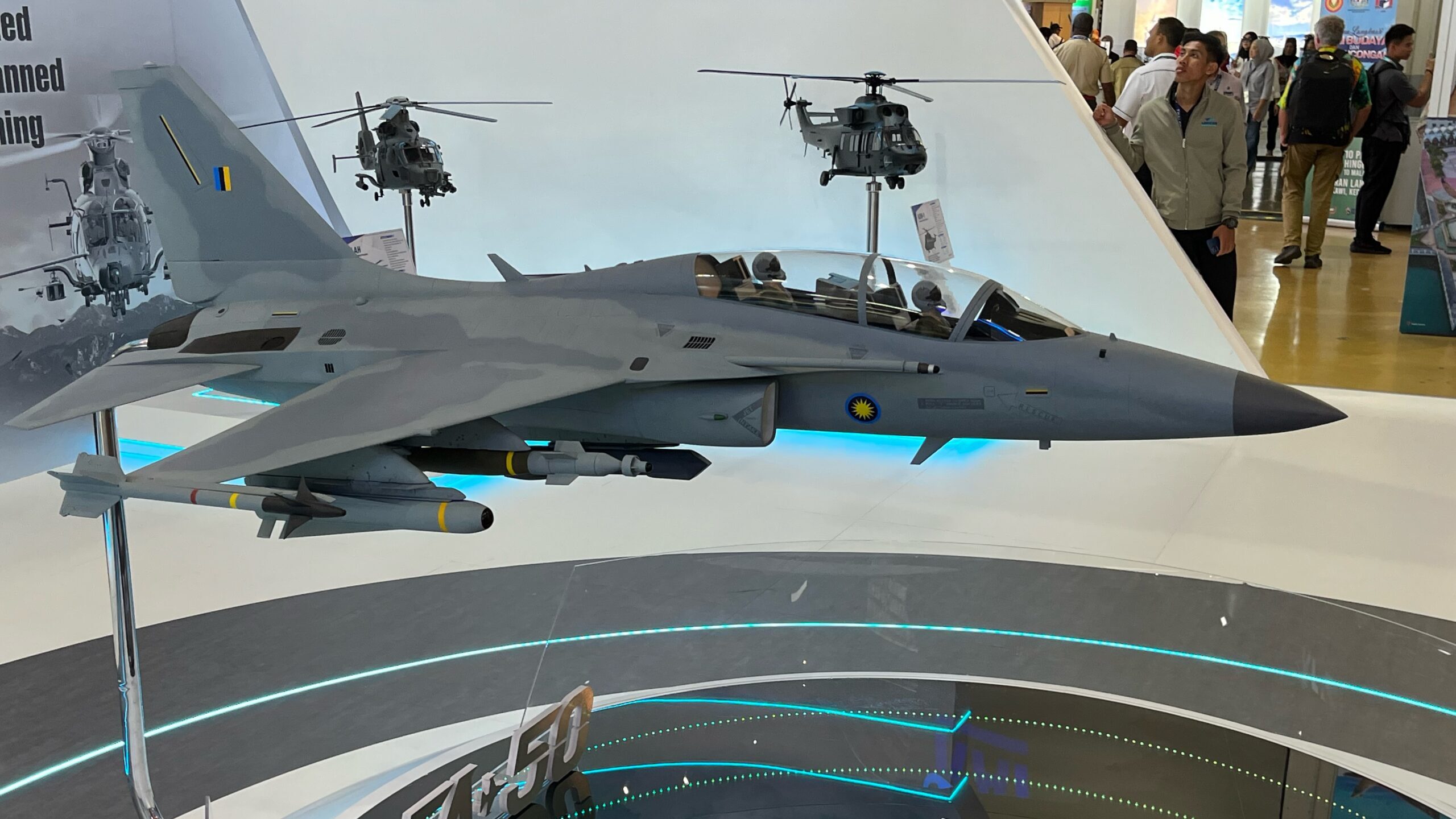
The RM11 billion in defense contracts finalized at LIMA’25 represents a significant investment in Malaysia’s national security and defense modernization efforts. The procurement of advanced assets such as the FA-50 light combat aircraft and Anka-S unmanned aerial vehicles (UAVs) enhances the operational capabilities of the Malaysian Armed Forces (MAF), particularly in air defense and intelligence, surveillance, and reconnaissance (ISR) missions.
The FA-50, produced by Korea Aerospace Industries (KAI), is a versatile light combat aircraft capable of both training and combat missions. Designed for cost-effective air defense, it offers supersonic speed, precision-guided munitions, and advanced radar systems. The Royal Malaysian Air Force (RMAF) is expected to benefit significantly from the FA-50’s dual role, enhancing both pilot training and frontline readiness.
Meanwhile, the Anka-S MALE UAVs developed by Turkish Aerospace Industries are satellite-controlled drones and capable of flying over 24 hours non-stop, making them ideal for long-range surveillance and reconnaissance. Armed with state-of-the-art sensors and strike capabilities, the Anka-S will bolster Malaysia’s intelligence, surveillance, and reconnaissance (ISR) capacity, particularly for maritime and border security.
The acquisition of the ATR 72 Maritime Patrol Aircraft (MPA) underscores Malaysia’s strategic commitment to safeguarding its maritime domains, particularly in the increasingly contested South China Sea. Developed by Leonardo (based in Italy), the ATR 72 is a twin-turboprop platform tailored for long-range maritime surveillance. Equipped with advanced radar, electro-optical sensors, and anti-submarine warfare capabilities, the aircraft is well-suited for monitoring Malaysia’s vast maritime zones. With an operational range exceeding 2,000 nautical miles and extended flight endurance, the ATR 72 enhances Malaysia’s coastal defense, supports search and rescue missions, and contributes to environmental monitoring—reinforcing its role as a critical asset in national and regional maritime security.
Beyond hardware acquisitions, the signing of multiple Memoranda of Understanding (MoUs) and Letters of Intent (LOIs) with international defense firms and institutions signifies Malaysia’s intent to foster strategic partnerships and collaborative development in defense technology. These agreements are expected to facilitate knowledge transfer, joint research, and potential co-production opportunities, contributing to the growth of Malaysia’s indigenous defense industry.

Overall, the outcomes of LIMA’25 reflect Malaysia’s proactive approach to addressing contemporary security challenges and its aspiration to become a regional hub for defense innovation and collaboration.




Leave a Reply