

By Makadir Ajam
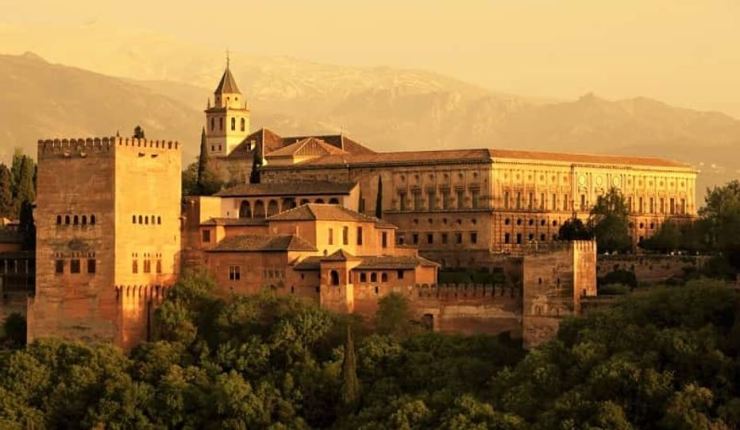
THE Alhambra complex, a rich tapestry of history and artistry nestled in Granada, Spain, stands as a profound testament to the intricate interplay of philosophy, art, science, and technology.
This iconic palace-fortress encapsulates a blend of knowledge and innovation, embedded within its architecture and the culture that created and sustained it. Here’s an exploration of how these elements intertwine within the Alhambra:
The philosophical underpinnings of the Alhambra are deeply rooted in Islamic thought, which emphasizes unity, infinity, and harmony. The design of the Alhambra reflects the Islamic ideal of paradise as a lush garden (jannah), which is symbolically represented through the extensive use of water in fountains and pools, lush gardens, and the integration of natural elements into living spaces.
The complex showcases an architectural philosophy that views the cosmos as a coherent and interconnected whole. This is evident in the use of repetitive geometric patterns and arabesques which symbolize the unending nature of the universe, reflecting the infinite nature of God in Islam.
Art in the Alhambra is not merely decorative but serves as a medium to manifest philosophical and theological concepts. The use of calligraphy, arabesque, and geometric patterns illustrates the Islamic prohibition against the depiction of sentient beings in religious contexts, channeling artistic expression into abstract and intricate designs.
These elements are crafted to inspire contemplation and awe, aimed at reflecting the beauty and perfection of the divine. The detailed tile work and stucco are also indicative of the high level of craftsmanship and the sophisticated aesthetic sensibilities of the Nasrid dynasty.
1.Islamic Calligraphy and Iconography:
- The walls of the Alhambra are extensively decorated with Arabic inscriptions—primarily poems, prayers, and passages from the Quran. This calligraphy is not just decorative but also conveys messages of power and faith. The use of geometric patterns and arabesques reflects the Islamic prohibition against the depiction of animate objects in religious art, showcasing an abstract, mathematically based aesthetic.
2. Tile Work (Zellij):
- The Alhambra is renowned for its elaborate ceramic tileworks known as ‘zellij’. These tiles form complex geometric patterns that are mathematically precise and are a testament to the artisans’ mastery of algebra and geometry. The symmetry and repetitive motifs symbolize the infinite nature of creation.
3. Stucco Work:
- Intricate stucco decorations cover entire surfaces within the Nasrid palaces, featuring not only geometric patterns but also vegetal motifs (ataurique). These decorations were crafted using molds and then assembled, demonstrating advanced craftsmanship.
The construction of the Alhambra demonstrates advanced understanding in various scientific fields, particularly in engineering and hydrology. The Alhambra’s sophisticated water system, which powered fountains and irrigated gardens, highlights the hydraulic engineering skills of the time.

The complex’s layout and the strategic positioning of its windows and walls also show knowledge of solar positioning and climatology, designed to optimize light and maintain temperature control inside the buildings.
1.Hydraulic Engineering:
- The use of water in the Alhambra is one of its most distinctive features, reflecting sophisticated hydraulic engineering. The complex included a series of acequias (water conduits) that brought water from the River Darro and distributed it throughout the palaces and gardens via a complex network of channels, pools, siphons, and fountains. This system not only irrigated the gardens but also cooled the palaces and added an aesthetic element to the architecture.
2. Acoustic and Light Engineering:
- Rooms and courtyards in the Alhambra were designed to enhance acoustic properties, facilitating the spread of sound during gatherings and performances. Strategic placement of windows and reflective surfaces maximized natural light and temperature control.
Technologically, the Alhambra reflects the pinnacle of what was achievable in the medieval period. The use of advanced construction techniques is evident in the dome of the Hall of the Abencerrajes, which is an architectural marvel of its time, showcasing the skill in crafting complex vaulted ceilings.
Furthermore, the technology used in creating the decorative elements, such as the ceramic tiles (azulejos) and the intricate woodwork, involved refined methods that were the result of centuries of technological evolution in the Islamic world.
1.Architectural Innovations:
- The builders of the Alhambra used advanced architectural techniques including the use of muqarnas (“stalactite” ceiling decorations), which are an architectural device used to transition between different spatial geometries. These elements are not only decorative but also structurally supportive.
2. Material Technology:
- The construction of the Alhambra utilized a variety of materials, including local clay, which was used for the red bricks and tiles that give the Alhambra its distinctive color. Advanced techniques in ceramic and glass production were also evident in the intricate tile work and stained glass.
The Alhambra, therefore, stands not only as a historical monument but also as a beacon of cultural and intellectual achievement. It embodies a confluence of art, science, and technology, underpinned by a profound philosophical ethos that continues to draw interest and admiration from around the world.
Its enduring legacy is a testament to the sophisticated civilization that created it and the universal values and knowledge it represents.



Leave a Reply