
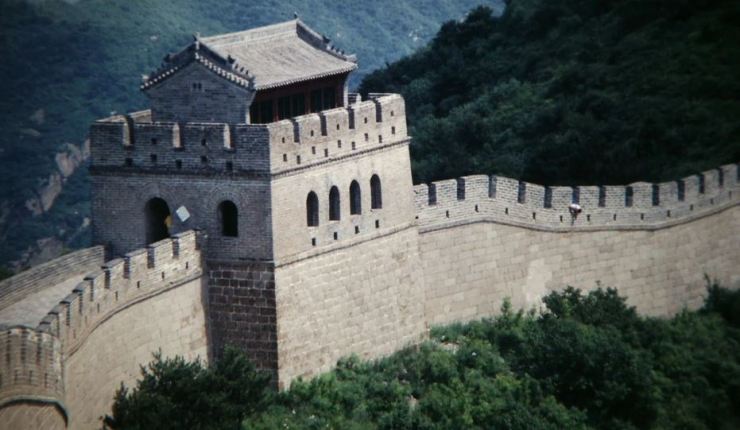

CHINA is a neighbour to the Tanah Air. Increasingly the encounters are more sophisticated and multifaceted. It was quintessentially, the ‘other’ civilization. And continues to be from the world view of the Malay Archipelago. But before we go to that narrative in a future essay, what is China to a European Sinologist?
The history of China, like that of Europe, is not a linear story of one static, everlasting and stubbornly uniform continent. A common line in history books, travel and museum guides, and in television documentaries runs: “What sets China apart from the rest of the world is the fact that it boasts a continuous civilization running through at least two and a half millennia.” Such is the cultural pride invoked on occasions by Chinese politicians, diplomats; as well as the narrative from the Chinese diaspora.
Many things have an admirably long history in China. Arguably, the greatness of a civilization is established by its achievements, not by claims to the longest history. Claims to be the “oldest living civilization” on the basis of the “longest continuous history” can also offer a licence for veiled or misplaced cultural exceptionalism. The history of China is narrated to consist of moments of political and geographical union interspersed by centuries of division.
In his 2019 book titled Chinese Thought from Confucius to Cook Ding, Roel Sterckx notes that in the period from the early third to the mid tenth century CE alone, more than 45 dynasties ruled over parts or all of its territory. Further back in time, more than 10 centuries had already elapsed before China would emerge for the first time as an empire in 221 BCE.
Sterckx’s interest is in questions like how the ancient Chinese think about the world and how those ideas differ from Western philosophy. In refuting the sentiment of historical continuity, Sterckx brings our attention that Chinese history is instead marked by “a striking measure of discontinuity.” One reason being that for large swathes of time, China has been ruled by regimes whose leading elites and officials were not ethnically Chinese. On that account, the Mongols and the Manchus alone already take up nearly four centuries on China’s historical chronology – in the Yuan and Qing dynasties.

Sterckx is Joseph Needham Professor of Chinese History, Science and Civilization at the University of Cambridge. The Sinologist specializes in the cultural history, religion and thought of pre-imperial and early imperial China as well as the classical and literary Chinese language. The first chapter of his book, aptly titled ‘China in Time and Space’ largely aims at countering the image of China as a uniform giant – either sleeping, restless or rising. He suggests that it is more useful to think of its history as a history of regions, to imagine its people as regionally and often ethnically diverse, and to look at those in power as agents charged with the challenging tasks of keeping the regions in lines with the demands of the political centre.
Throughout China’s long history there lingers a pronounced regional consciousness. To this, Sterckx cites some major examples. One of China’s constants is the division between north and south in that the gradual southward expansion of the Han Chinese from the Yellow River basin is of key importance. Further, in the north, China faced the threat of invasion by non-Chinese.
But the origins of the term ‘China’ itself remain disputed. Sterckx points to the widely held view that is related to Qin, the name of the state that founded the first unified empire. Another is the Sanskrit term, Cina, appearing in Indian sources that may go back some two
centuries earlier. According to Sterckx, before the unification of the Chinese empire in 221 BCE and the first long-lasting Han dynasty, few would have identified themselves as ‘Chinese.’ Moreover, as in China today, evidence in ancient texts show that people were aware linguistic diversityy.
The Yellow River shapes some of the ideas on Chinese self-identity and that of the other. The middle and lower reaches of the river came to be identified as Zhongguo, translated in the plural as the ‘Central Kingdoms.’ We have heard China referred to as the ‘Middle
Kingdom.’ These are ideas in modern times. It is the known civilized world to the Chinese, known as ‘All under Heaven’ (Tian xia). Quite in the Khaldunian sense, we imply that the Chinese are conscious of how the environment and climate influence human behavior. In ancient China, according to Sterckx, there was the belief that the soil and climate of a region influenced not only the way people looked, but also their character.
For example, to be born in the Central Kingdoms, according to some at least, came with temperamental advantages. We find descriptions like “People who live on fertile soil are beautiful; people who live on barren soil are ugly. People who live on level ground are clever…People in the east are tall and large, they become knowledgeable early but are not long-lived…People in the west are daring but not humane…People in the north are stupid as birds or beasts but are long-loved…People in the centre are clever and sage-like and are good at government.” This is geographical China.
Ancient China produced a chain of ideas that was to inform the way in which the Chinese have viewed the world ever since. Such can be identified as the six schools or lineages in the ancient China’s philosophical landscape: the School of Yin-Yang, the Confucians,
Mohists, Legalists, the ‘School of Names,and the Daoists. Together, these came to be known as the ‘One Hundred Schools’ – a common term for many. These schools, not neatly defined, serve as a useful means of understadning how ideas were spread and made part of the canon of ancient China.
One of these is the idea of warfare. Sterckx refers to the Zhou period. The Zhou identified heaven (Tian), the powers of the sky as their supreme authority. ButtThe Zhous faced territorial integration forming a patchwork of hundreds of territorial units and mini states.
The breaking down of this cohesion led to the emergence of the warring state: ‘warring’ because warfare and gaining military supremacy became a core mission; ‘state’ because new rulers proclaimed the territorial state as their ambition. Sterckx cites the opening lines from Master Sun’s Art of Warfare (Sunzi bing fa) : “Warfare is the greatest affair of the state, it is the basis of life and death, and the way to survival and extinction.”
China’s masters of philosophy were a product of the age of profound political and military turbulence. There was chaos. In the classical age, many thinkers roam from court to court to sell their ideas to whoever would grant them sustenance and patronage. In Mencius, it was stated “Surely old man,” asked a king, “you haven’t come all this way without wanting to tell me how I can benefit my state?” So why does China and the Chinese matter today?


Leave a Reply