
By Dr Noor Munirah Isa
Malaysia’s aspiration to achieve net-zero greenhouse gas emissions by 2050 has placed sustainability and climate action at the centre of national conversations. The National Climate Change Policy 2.0 makes this direction clear, reaffirming Malaysia’s ambition to reach net-zero GHG emissions by 2050.
Much of the discussion on Net Zero rightly focuses on energy. This is understandable because energy production and transportation account for a major share of Malaysia’s greenhouse gas emissions. According to the policy, the energy sector accounts for more than 79 per cent of emissions, mainly through energy production and transportation. Energy transition, renewable energy, carbon management and industrial transformation are therefore central to any serious Net Zero pathway.
However, climate action is not only a technical transition. It is also a social and organisational transition. Policies and technologies can set the direction, but people determine how far that direction is understood, accepted and translated into practice. This is recognised in the National Climate Change Policy 2.0, which emphasises a whole-of-society and whole-of-nation approach.
It states that planning and implementation of climate action must be participatory, inclusive and transparent, involving all segments of society. The policy also highlights communication, education and public awareness as important enablers, including efforts to support behavioural and lifestyle changes.
The challenge, therefore, is not whether awareness and participation are mentioned in policy. They are. The harder question is how these commitments can be translated into meaningful learning experiences and everyday action.
For many people, terms such as sustainability, low-carbon transition and Net Zero may still sound distant or technical. They may be associated with governments, companies, experts or large-scale infrastructure. Yet sustainability is also shaped by everyday decisions made by people as workers, consumers, commuters and members of organisations.
This is where sustainability competence becomes important. Awareness is necessary, but it is not enough. People may know that sustainability matters, yet still struggle to act when the more sustainable option involves cost, time, workload, comfort, convenience, unclear responsibility or lack of support.
Sustainability competence is not simply about knowing the meaning of Net Zero or being aware that sustainability is important. It is about being able to connect these ideas with everyday situations. In practice, this means knowing how to weigh options, understand trade-offs and choose actions that are realistic. Saving energy, reducing waste or organising greener events may sound simple, but each decision can involve questions of comfort, cost, workload, convenience and shared responsibility.
This matters not only in schools and universities, but also in workplaces and organisations. Sustainability programmes often focus on students or younger audiences, while staff engagement is commonly delivered through talks, briefings or one-way campaigns. These formats are useful for introducing policies and targets, but they may not be enough to build the judgement and confidence needed for everyday action.
Staff are adult learners with their own work experience and practical knowledge of how organisations actually function. They understand the realities of procurement, event management, food arrangements, shared spaces and administrative routines. If sustainability is to become part of organisational culture, staff should not be treated only as recipients of instructions. They should also be engaged as contributors.
When staff engagement is limited to receiving information, sustainability may remain something they are told about rather than something they are invited to think through. A more participatory approach allows staff to connect policy goals with their own work realities, raise practical concerns and suggest actions that are more likely to be accepted and sustained.
A university campus provides a useful example of this wider challenge. It may appear to be a small setting, but it reflects many sustainability issues found in other organisations and communities: energy use, mobility, waste, purchasing decisions, event management, resource use and workplace culture.
At Universiti Malaya, this question is particularly relevant because the university has articulated its direction towards a carbon-neutral campus by 2030 and Net Zero emissions by 2050. Such targets cannot remain only at the level of institutional documents, technical plans or sustainability offices. They need to be understood and supported by the wider campus community.
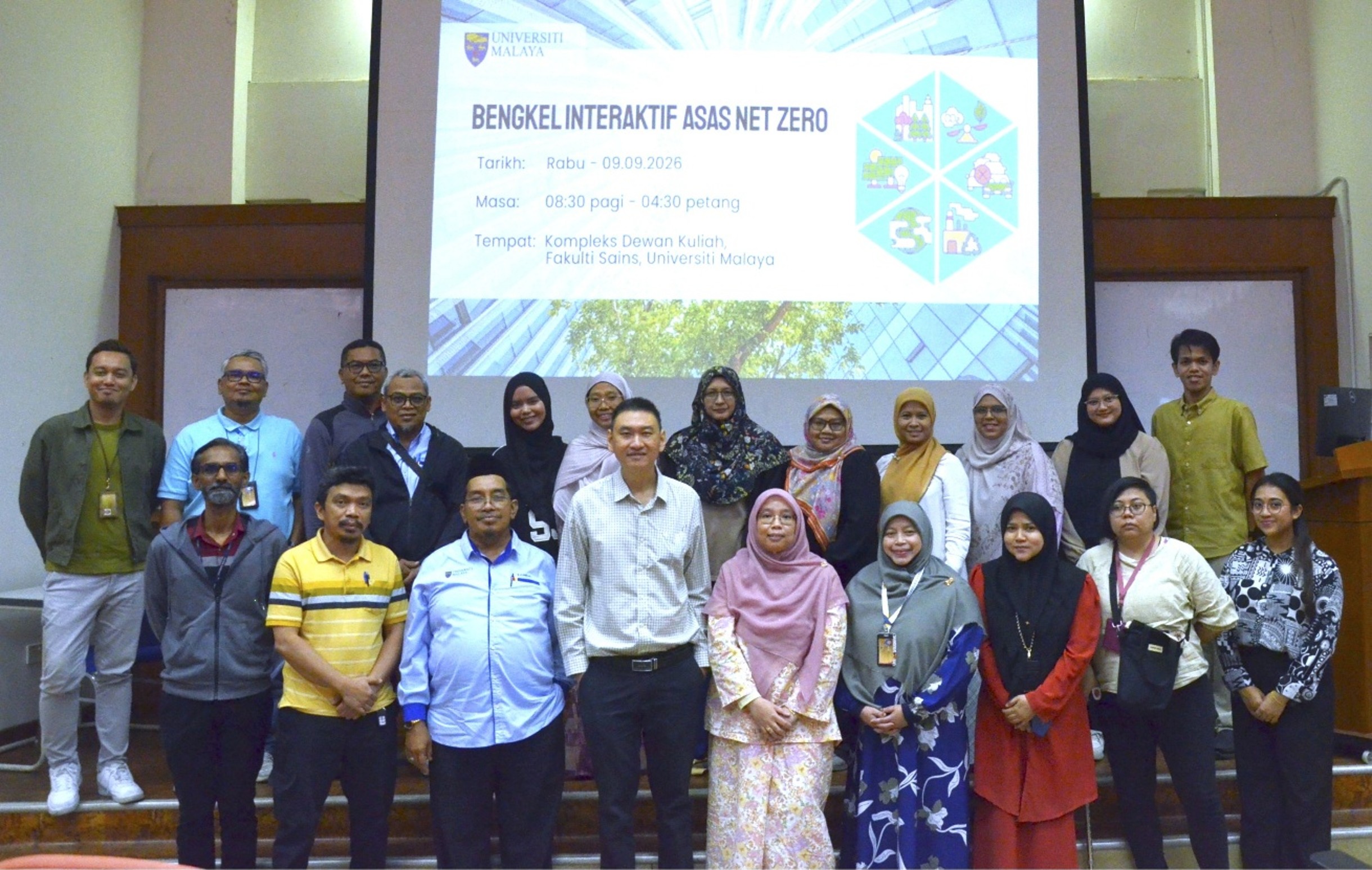
This approach was recently explored through a pilot workshop, Bengkel Interaktif Asas Net Zero, held on September 9, 2026 at Universiti Malaya under the UM Living Labs Towards Just Net Zero grant. The workshop was part of a campus-based initiative to develop ethical competence for Net Zero leadership by helping non-academic staff connect sustainability and Net Zero aspirations with everyday work practices. Instead of relying only on a lecture format, participants discussed campus-based issues through activity stations on energy, mobility, food waste, resource use and workplace culture. They were encouraged to consider why good practices are not always followed consistently.
Saving energy, choosing lower-carbon mobility, reducing food waste or organising greener events may sound simple, but each involves practical constraints such as comfort, time, cost, access, workload and shared responsibility. By discussing these barriers, participants were able to move beyond general slogans and consider actions that are more realistic.
Such efforts may be small compared with national energy and industrial transitions, but they point to an important part of achieving Net Zero in practice. If Malaysia’s climate and sustainability goals are to be meaningful beyond policy documents, people need opportunities to understand, question, reflect and act within their own contexts.
Building a culture of climate action therefore requires more than awareness campaigns. It requires learning spaces that connect knowledge with values, experience with reflection, and aspiration with realistic action.
Policies and technologies remain essential. But sustainability also needs people who understand the direction, care about its implications and are able to make better choices within the realities of everyday life. In the long run, this may be how Net Zero moves from being a national commitment to becoming part of a broader sustainability culture.

The author is a senior lecturer at the Department of Science and Technology Studies, Faculty of Science, Universiti Malaya, and leads a UM Living Labs Towards Just Net Zero project on developing ethical competence for Net Zero leadership.

Leave a Reply