
By Vincent D’Silva
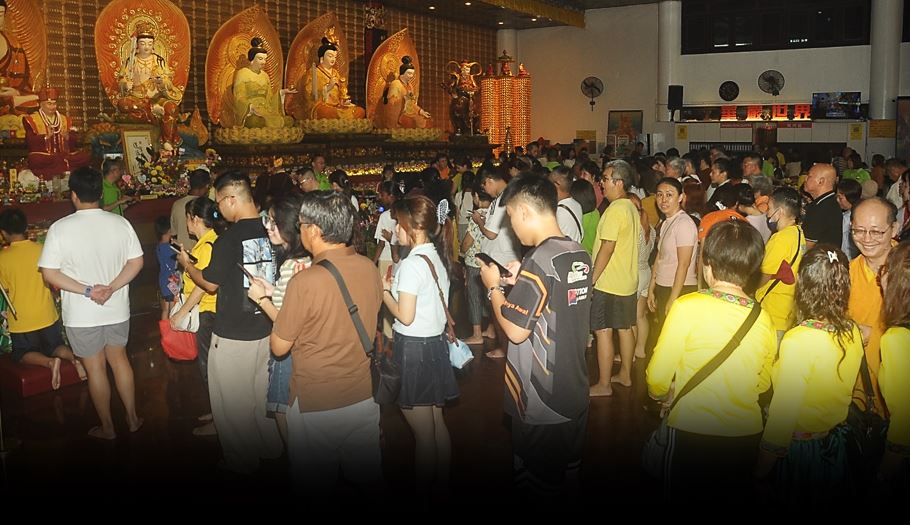
JOHOR BAHRU: In a quiet atmosphere filled with flowers, prayers and acts of kindness, Wesak Day was celebrated at the Taman Gaya Buddhist Hua-Yan Temple today, drawing devotees from Taman Gaya, Desa Cemerlang and nearby communities to observe one of the most sacred days in the Buddhist calendar.
Across Malaysia, the celebration once again reflected the country’s rich multi-racial and multi-religious fabric, where people of different backgrounds continue to live side by side in mutual respect, peace and understanding.
At the temple, the day began with devotees arriving steadily from early morning, some carrying flowers, others bringing their children along to take part in the rituals. The temple grounds, beautifully decorated with flowers, carried an air of calm reverence as families, senior citizens, youths and volunteers gathered in the spirit of prayer, reflection and gratitude.

Taman Gaya Buddhist Hua-Yan Temple chairman Pang Yun On said Wesak Day commemorates three important events in the life of Gautama Buddha — his birth, enlightenment and passing.
“This ceremony brings peace and reminds us to cleanse our minds of impurities such as hatred and ignorance,” he told ApaKhabar TV News Online.
Pang said this year’s celebration felt especially meaningful, as the peaceful and flower-decorated temple created a deeply spiritual experience for devotees who came not only to pray, but also to reflect on their lives and renew their commitment to compassion and moral living.
Among the main rituals observed was the bathing of the Buddha statue, a symbolic act that remains one of the most visually prominent and meaningful features of Wesak Day.
Pang said the ritual commemorates the birth of Gautama Buddha and symbolically recreates the moment when, according to Buddhist tradition, heavenly beings showered the newborn prince with pure water.
“In practice, the ritual does not only symbolise the cleansing of Buddha’s statue but also our inner selves. It clears our minds from greed, anger, ignorance and jealousy,” he said.

Inside the temple’s main hall, devotees, including young children, were seen taking part in traditional rituals such as bathing the Buddha and offering flowers. For many families, it was also a moment of quiet teaching, where parents guided their children through simple acts of reverence, helping them understand values that go beyond ceremony.
The soft sound of chanting, the scent of flowers and the gentle movement of devotees created a scene of stillness in an otherwise hurried world — a reminder that faith, at its heart, is often found in small, sincere gestures.
Pang said Wesak Day also offers devotees a dedicated space to observe important rituals while reminding them to practise virtues and uphold morality in their daily lives.
He added that Buddhism teaches followers to be sincere, compassionate and mindful, while focusing on actions that benefit both themselves and others.
“What comes back to us afterwards is not for us to worry about,” he said.
Pang said Wesak Day should serve as a catalyst for devotees to perform good deeds every day, rather than only during the festival.
Nevertheless, he said the celebration remains a vital platform for Buddhist disciples to observe the five precepts and seek blessings through collective chanting, prayer and the ritual of Buddha bathing.

In keeping with the Buddhist value of dana, or giving, the temple also served free vegetarian meals and drinks to all visitors throughout the celebration.
“We offer free food and drinks to all attendees at our temple, regardless of their ethnicity, race and religion. This is one of the examples of dana in practice,” Pang said.
He said the free meals initiative has become one of the meaningful traditions of the annual Wesak Day celebration, reflecting the values of compassion, charity and togetherness.
“Our volunteers worked tirelessly to ensure everyone who came to the temple was served over the past few days,” he said.
The temple’s programme combined spiritual observances with acts of charity and community service, in line with the teachings of the Buddha. Pang said the activities were designed not only to commemorate the birth, enlightenment and passing of the Buddha, but also to encourage devotees to practise compassion, generosity and mindfulness in their daily lives.
Visitors were also able to receive blessings from monks during special blessing services held throughout the day.
Adding to the community spirit, students from Foon Yew High School, Seri Alam set up a stall to sell rations and other items to raise funds for their school activities. Their presence added a youthful energy to the occasion, showing how religious and community events can also become platforms for learning, service and shared responsibility.
For devotees, volunteers and visitors, the day was not merely about ritual, but about returning to values that remain deeply needed in modern society — kindness, restraint, gratitude and peace.

Also present at the celebration were Austin Zone MBJB city councillor Teow Chia Ling, who attended as guest of honour, and Taman Gaya Buddhist Hua-Yan Temple vice-chairman Alan Ho See Meng.
As the day unfolded, the temple continued to welcome devotees with food, blessings and quiet warmth. Beneath the flowers and chanting, the deeper message of Wesak remained clear: that peace begins not in grand words, but in a cleansed heart, a generous hand and a mind willing to let go of hatred.


Leave a Reply