
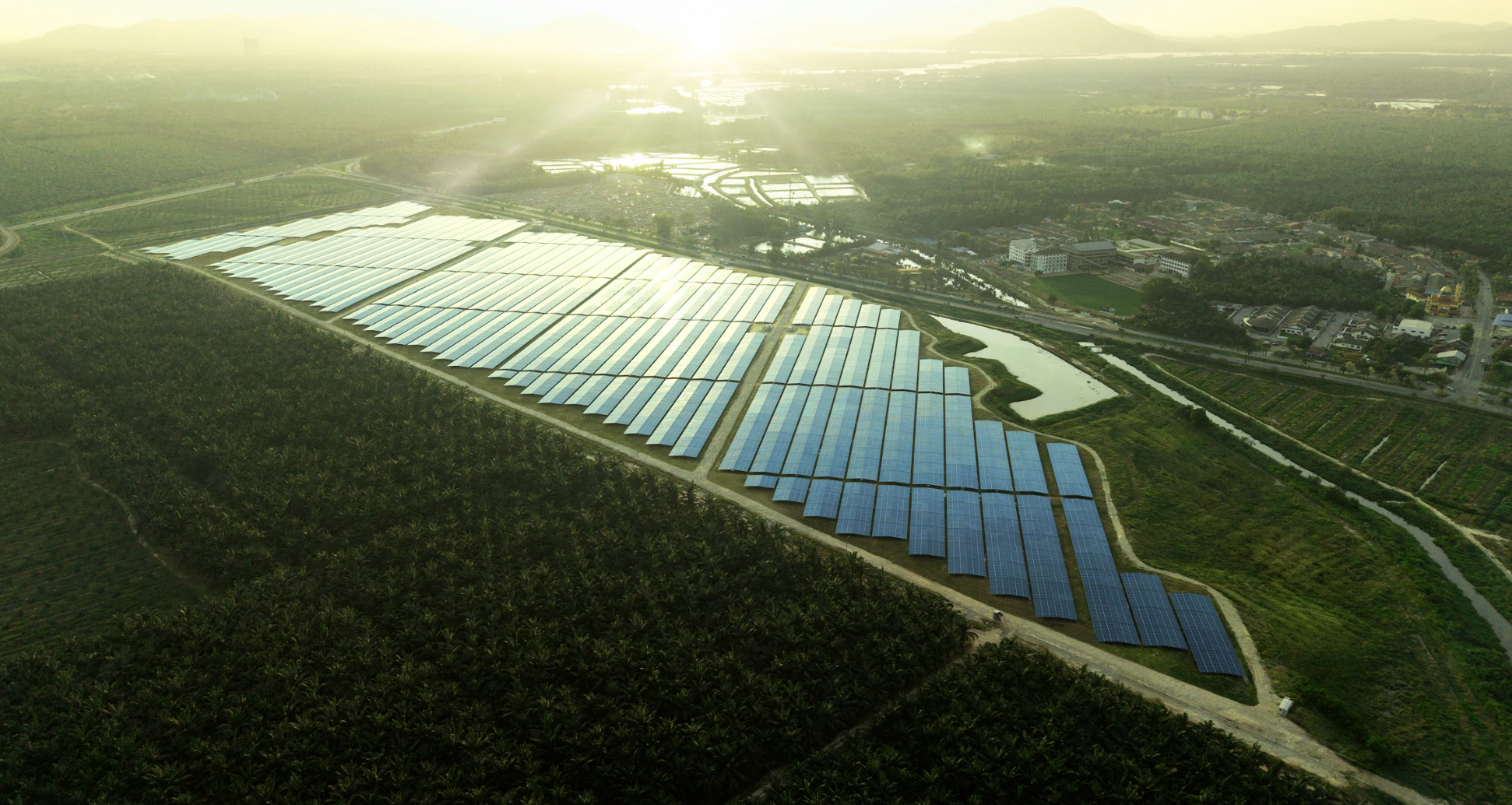
KUALA LUMPUR: Tenaga Nasional Berhad (TNB) through its wholly owned subsidiary TNB Renewables Sdn Bhd (TRe), Solarvest Holdings Berhad and Savelite Engineering Sdn.Bhd have announced the completion of their respective solar photovoltaic plants under Malaysia’s Corporate Green Power Programme (“CGPP”) via Setia Kawan Energy Sdn. Bhd. (“SKE”) and Selarong Pertama Energy Sdn. Bhd. (“SPE”).
The completion of both CGPP solar farms was announced at a ceremony on April 15, witnessed by Deputy Prime Minister and Minister of Energy Transition and Water Transformation (PETRA), Datuk Amar Fadillah Yusof.
His presence underscores the Government’s strong commitment to advancing Malaysia’s energy transition, particularly through market-based renewable energy mechanisms such as CGPP.
Fadillah said the government has made energy security a strategic national priority for Malaysia amid global market volatility and geopolitical disruptions.
Fadillah said these pressures continue to weigh on energy costs and economic stability, making resilience increasingly critical and that Malaysia must strengthen its domestic energy base through stable, sustainable and reliable sources to ensure long-term energy security.
“Clean energy supply has also become a key determinant of investment decisions in today’s global economy,” he said.
The completion of the two solar projects with a combined investment value of RM300 million marks further progress in Malaysia’s clean energy transition under the CGPP.
The two solar farms, located in Manjung, Perak, and Kulim, Kedah, have a combined capacity of about 100 megawatts (MW), with contributions of about 51MW and 57MW respectively.
Electricity generated from the projects is supplied virtually to corporate consumers, including Micron Semiconductor Malaysia Sdn Bhd, Bursa Malaysia Bhd and NTT Global Data Centers CBJ1 Sdn Bhd.
Fadillah added that clean energy supply is increasingly influencing investment decisions among multinational corporations, particularly in sectors such as semiconductors and data centres.
Looking ahead, he said grid modernisation will be critical to support higher renewable energy penetration.
“Our grid must evolve to support higher renewable penetration, with scalable energy storage, digitalisation and greater flexibility,” he said, adding that battery energy storage systems will be a key pillar in maintaining system stability as renewable energy adoption increases.
TNB President/Chief Executive Officer, Datuk Shamsul Ahmad said, the successful completion of these CGPP projects is more than a project milestone — it is clear proof of Malaysia’s readiness to accelerate its energy transition.
“CGPP represents a structural shift in how renewable energy is delivered in Malaysia, enabling corporate consumers to directly participate in decarbonisation through market-based mechanisms. Through strong partnerships and a robust ecosystem, we are not only expanding renewable energy capacity but also strengthening Malaysia’s position as a competitive and sustainable destination for next-generation industries.”


Leave a Reply