
By Vincent D’Silva
KUALA LUMPUR: In the busy corridors of a school, where laughter, chatter and the shuffle of hurried footsteps echo through the day, there are also quieter stories unfolding — stories of worry, loneliness, uncertainty and hope.
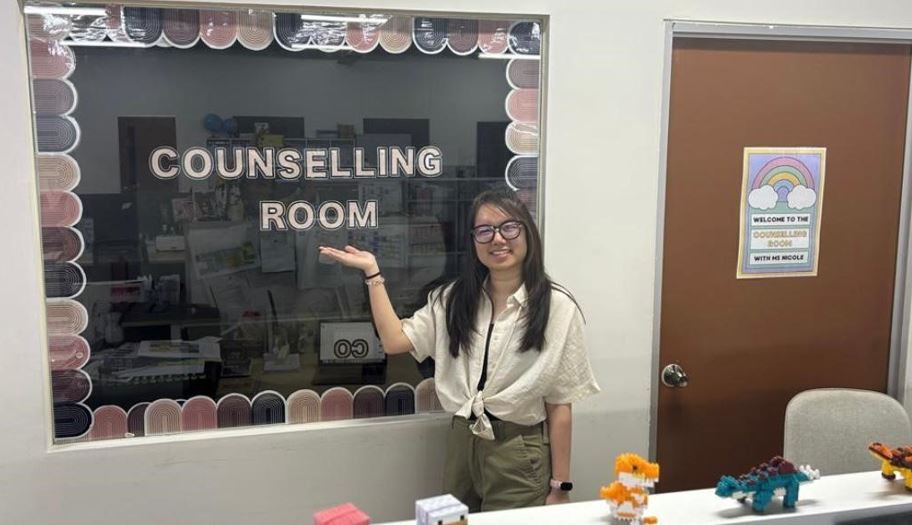
For Nicole Ann Beins, a counsellor at Global Oak Tree Scholars International School, those quiet stories are the ones she listens for most carefully.
Behind the doors of her counselling room, away from the noise of classrooms and playgrounds, children sometimes speak about things they have never voiced before — fears about failing exams, worries about friendships, or the weight of expectations they feel too young to carry.

For Beins, the journey into counselling began with a simple yet powerful curiosity about human emotions — especially the ones children struggle to express.
“I’ve always been drawn to understanding emotions, particularly the quiet ones that children don’t always have the words for,” she said in an interview with ApaKhabar TV.
“During my counselling training, I realised how powerful it is when a young person feels truly heard and not judged.”
Schools, she noted, are where children spend most of their waking hours. It is within those walls that friendships form, identities take shape, and personal challenges often first surface.
“I wanted to be someone they could turn to within that space — not only when they are in crisis, but also as they learn to understand themselves,” she explained.
Though she has served as a school counsellor for only two years, including her internship, Beins has already witnessed moments that remind her why the profession matters deeply.
One encounter in particular remains etched in her memory.
A student who had been guarded and quiet during several counselling sessions eventually broke the silence with a simple sentence.
“I feel safer talking here,” the student said.
The words were neither dramatic nor emotional on the surface. Yet for Beins, they carried immense significance.
“For a child to feel safe enough to let their guard down is not something I take lightly,” she said. “It reminded me that sometimes the biggest breakthroughs are quiet ones.”
In today’s fast-paced world, the emotional landscape of students is shifting in complex ways. According to Beins, many young people grapple with issues that are both deeply personal and widely shared among their peers.
“Friendship conflicts, feelings of exclusion, and not feeling ‘good enough’ are very common,” she said. “I also see a lot of anxiety — anxiety about academic performance, about disappointing parents, and about fitting in.”
More than ever, she observes students experiencing emotional overwhelm before they have fully developed the skills to manage those feelings.

Compounding these challenges is the powerful influence of social media, which has changed how young people see themselves and others.
“Social media has amplified comparison and visibility,” she said. “Students are exposed to curated versions of success, beauty and lifestyle at a very young age.”
Where friendship tensions might once have ended when the school bell rang, digital platforms now allow those tensions to follow students home.
“In the past, issues might end at school,” she explained. “Now they can continue through phones and social media. There’s constant comparison — appearance, popularity, achievements — and that can intensify feelings of inadequacy.”
Because children often struggle to articulate their distress directly, Beins has learned to watch carefully for subtle signs.
Sometimes the signals are quiet — a lively student who suddenly withdraws, or a high-performing child who loses motivation.
“Frequent complaints of headaches or stomachaches can also be indicators,” she said. “I also notice irritability, perfectionism, or when students are unusually hard on themselves.”
These behavioural shifts often reveal emotional struggles that words cannot.
Building trust with such students requires patience — something Beins believes is essential in counselling young people.
“I never rush them,” she said. “Trust with children is built through consistency, warmth and respect.”
Rather than beginning immediately with serious conversations, she sometimes starts with games, drawing or simple conversations that allow the student to feel comfortable.
“I let them know they are in control of what they share,” she explained. “When they realise they won’t be forced or judged, they begin to open up naturally.”
Despite the emotional challenges students face, success in counselling is not always measured through dramatic transformation. Often, it is reflected in small but meaningful changes.
“Success might be a child who learns to pause before reacting in anger,” she said. “Or a student who once avoided school beginning to attend more regularly.”
She has also seen students who initially rated their mood very low gradually develop coping skills and begin to believe they can manage their emotions.

“Watching that growth — even when it’s small — is incredibly meaningful,” she said.
Much of a counsellor’s work, however, remains unseen by the public. Beyond one-on-one sessions with students, counsellors often coordinate with teachers, consult parents, manage crises and maintain careful documentation.
“We carry stories of family conflict, grief and trauma that we cannot publicly speak about,” Beins noted. “The emotional labour is significant, and much of the work happens quietly behind closed doors.”
When students face academic pressure, she helps them separate their self-worth from examination results.
“We work on realistic study plans and ways to manage anxious thoughts,” she said.
For students struggling with family issues, the counselling room becomes a safe place to process emotions and develop coping strategies.
“I help them build emotional regulation skills and identify safe adults they can turn to for support,” she explained.
Yet Beins emphasises that a child’s emotional well-being is not shaped by counsellors alone. Parents and teachers play crucial roles in nurturing resilience and emotional security.
“Parents and teachers are the primary emotional mirrors in a child’s life. When adults respond with empathy rather than immediate correction, children learn that emotions are manageable rather than shameful,” she said.
Even simple changes — such as listening fully before offering advice — can strengthen a child’s sense of safety and trust. For Beins herself, maintaining emotional balance is equally important.
“As counsellors, we cannot pour from an empty cup. I prioritise supervision, reflection and maintaining boundaries,” she said.
She also makes time for rest and meaningful relationships beyond her professional life, reminding herself that she is only one supportive figure in a child’s broader journey.
At the heart of her work lies a message she hopes every struggling student will hear.
“You are not weak for feeling the way you feel,” she said gently. “Emotions are not weaknesses — they are signals.”
And for the many young people who feel isolated in their struggles, she offers reassurance.
“Reaching out is not a sign of failure,” she said. “It is a sign of courage.”
In the quiet sanctuary of a counselling room, where a child’s voice is finally heard without judgment, that courage often becomes the first step toward healing — and hope.


Leave a Reply