
By Badrolhisham Bidin
There are two “iconic” things that I have missed when I first came to Kuala Lumpur as a working adult. Not completely, maybe some flirtatious moments with the two items that have become the talk of the town until now.
First, it was the pink minibuses and the second thing is the infamous squatter villages mushrooming in the heart of KL then. For instance, what is now known as Bangsar South was filled with setinggan or what used to be “affectionately” known as Seting Garden.
A quick check on the Net says a squatter village is a low-quality residential area where people live without legal right to the land or permission to build. Yes, the villages were built by out of towners who could not afford to rent or own property then.
Illegal immigrants who migrated to Malaysia in the 60s, 70s and 80s also defied the law and built makeshift homes, some were transformed into “mansions” in no time. Fires and fights were common then.
My sister who lives in Taman Melawati, Ulu Klang offered me to stay there but realising that my working hours were weird to most, I ditched the idea. Another suggestion was from my late eldest brother, to stay with a distant relative in the Sri Pahang flat nearby Balai Berita.
It was a one-room apartment, with a living room, kitchen and a bathroom. She was staying with her two children and warmly welcomed me to her house. I felt guilty actually, to intrude but she insisted.
I walked to work and came home at 3am in a company’s car which was provided then. During daytime when she went to work and her children off to school, I would take the only bed in the house to sleep. The children returned to a babysitter after school, waiting to be fetched by the mother after work.
When the relative cooked in the kitchen, she would have to move away to allow me to get to the bathroom as the kitchen was narrow.
I returned home in the wee hours of the morning, greeted by the smell of urine in the elevator and if I walked up the staircase, there would be addicts, taking their shots or sleeping.
They never disturbed me, sometimes uttering “Brother, baru balik? Or something like that and I would answer them politely.
Now, such apartments have been rebranded as a studio unit, some selling beyond RM1m per unit.
A week later, a colleague found me a room in a single-storey corner lot terrace house in Lucky Gardens, with attached bathroom.
The rent was about RM80 a month and it went up to RM100 in the past three years I stayed there. It was a family home, owned by a young Indian couple with two children. Mrs Rama was a nurse who also worked shifts. The other room next to mine was rented out to a couple of college students.
Most of my colleagues then were staying in Kampung Abdullah Hukum, just across the busy Jalan Bangsar and I would sometimes visit them after work to watch movies. Their houses were basic units, some parts were not even cemented, with only dried earth as the floor. But they were contented with the condition. Most of them were later offered low-cost apartments after the kampung was razed to the ground in a big fire.
What I could not stand is the toilet, usually a makeshift unit outside the house and whatever in the bucket would be carried away by the municipal workers in the morning. When it was time to do it, I would excuse myself to go home!
Since my rented room was a walking distance to the office, I would walk to work, taking a shortcut that cut across another squatter village, dwelled by locals. Sometimes, I was greeted by the kampung women and a couple of them would invite me for a drink, which I always politely declined. Maybe they pitied this scrawny young man walking to work daily.
I would later hire a lorry to transport my 70cc Honda Cub from Muar to Kuala Lumpur to go to work or visit my sister’s family during the day offs or go to Pertama Complex to play games. Prior to my stint in NST, I used to frequently travel to Kuala Lumpur during school holidays.
My sister was then staying in Klang, so I would hitch a ride in my brother-in law’s car early in the morning to Kuala Lumpur for jalan-jalan around the city and hopped in their car to return to Klang. If I wanted to come home early, I would take the long bus back from the Klang Bus Station.
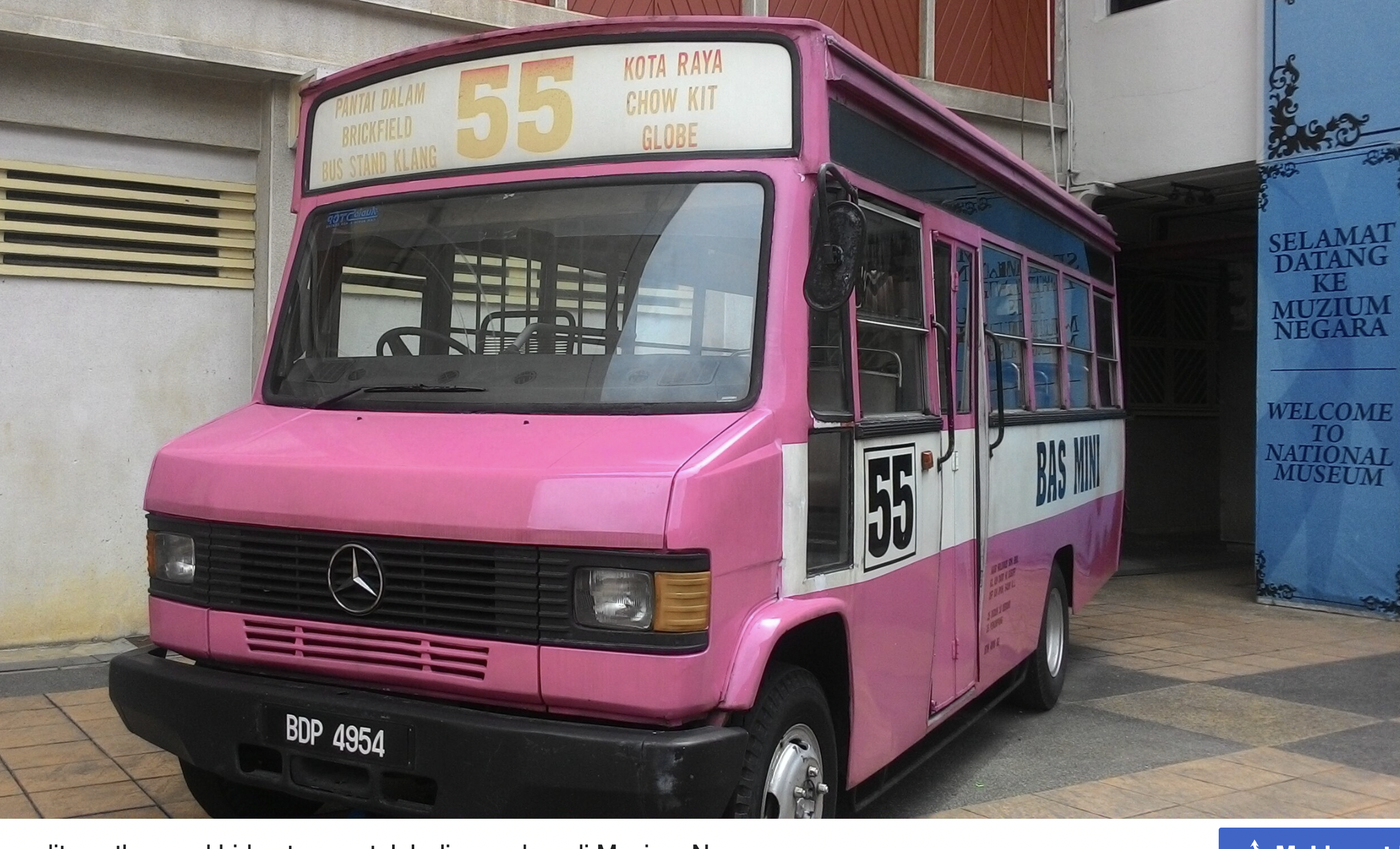
I did not completely shun the pink minibuses, my uncle would often ask me to accompany him to go around KL and we would take the bumpy rides together. I hated the rides, and I would feel nauseous, riding in a forever “filled to the brim” bus, especially after work, with everyone sweating.
I would always prefer to ride my red Honda wherever I went as it was easier to navigate the horrendous traffic jam. Once I was stopped by the police during their weekend ops against the notorious Mat Rempits. Without even asking for a driving licence or road tax, the men in white told us to push our bikes to Jalan Bandar traffic police station.
There was no room for argument or explanation. Just push. When we reached the station, we were told to squat in an open area and they would start calling us one by one inside. When it was finally my turn an hour later, the officer asked me what I was doing at 3am in the city.
I told him I worked with the media and was returning home when I was stopped by them. The officer’s voice suddenly turned soft. “Why didn’t you tell us? I told them I had no chance to explain myself. I was then brought to see the investigating officer in his room and was offered coffee, food and whatever there was for those on duty.
They apologised profusely but I told them it was OK. Just give me the statistics and let me take some photos. I got a story and some friends among them!
The pink buses disappeared when the airconditioned Intrakota was introduced. While there were efforts to revive the service, it did not materialise and so it became part of KL history, just like the squatters. One of the buses is displayed at the National Museum. Go take a peek.
Most of the squatter villages were either demolished or caught fire. The land was usually reclaimed by the local authorities and low-cost flats were built. Nowadays, the units would comprise two or three rooms. Still small but a more decent place to stay for families.
As for Sri Pahang, I recently met someone who said the housing blocks were demolished to make way for more modern dwellings. The same fate befell the Pekeliling flats much earlier. The ones in Loke Yew were modified to fit in more rooms.
Did I really miss the two icons? Yes and no. But really, I am thankful that I did not have to experience the two firsthand.

Leave a Reply