
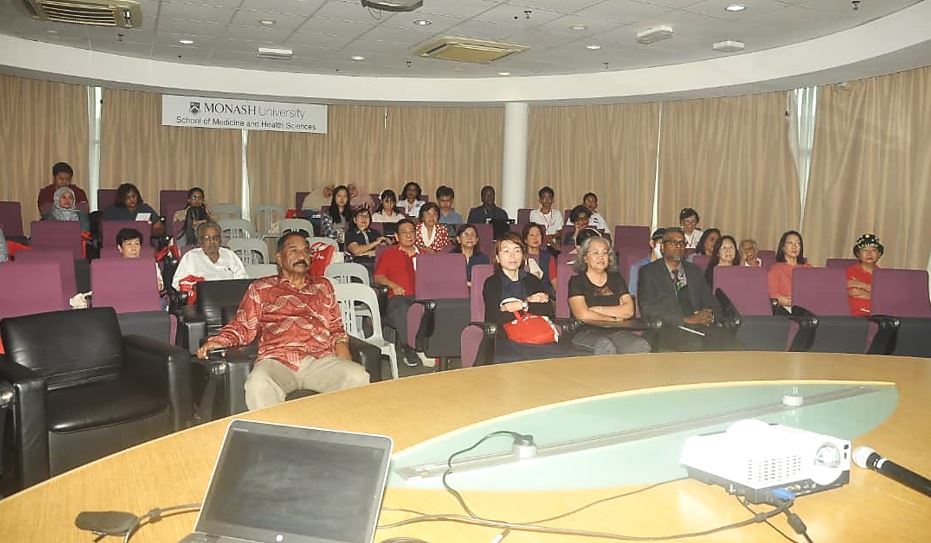

JOHOR BAHRU: Experts, educators, students, and the public gathered this week for a groundbreaking Forum on Education & Awareness: Dementia Prevention, aiming to tackle one of the most pressing public health challenges of our time.
Held at Monash University, the event brought together experts like psychologists, geriatrician, psychiatricts, caregivers and policymakers to discuss the latest research on dementia and the vital role that early education and lifestyle changes play in reducing risk.
The forum emphasized how preventive strategies—such as cognitive engagement, physical activity, and proper nutrition—can significantly delay or even prevent the onset of dementia.

Organized by the Johor Bahru Alzheimer’s Disease Support Association (Jobada) in collaboration with Monash University, the forum featured keynote speeches, panel discussions, and interactive questions and answer sessions and a forum designed to empower both professionals and the public with knowledge and tools for dementia prevention.
Speakers stressed the importance of raising awareness not just among older adults, but across all age groups, underscoring how lifelong learning and healthy habits contribute to long-term brain health.
Attendees left the event with a renewed sense of urgency and commitment to spreading information and breaking the stigma surrounding dementia.
In his opening address, Jobada chairman, M. Soorian gave a brief overview of the works of Jobada via a video-clip presentation.
He said Jobada is a non-profit organization set up to promote awareness of Alzheimers Disease in the state and to help dementia patients and their families living here.
According to Soorian, the original aims of Jobada, include: educating clients and caregivers (family and formal) on the dementias and its treatment.
Besides that, he says the centre provides training to improve their skills in caring for the people with dementia.
He said they also provide support and counseling services for the family and non-family members of people with dementia; thus helping to relieve their burden.
The centre provides psychosocial activities to people with dementia via provision of daycare services to people with disabilities.
In her talk on Dementia Overview and Treatment, Dr Ng Chai Chen, a Consultant Geriatrician at Hospital Sultan Ismail said dementia is becoming an increasingly pressing public health concern in Malaysia, with the 2018 National Health and Morbidity Survey (NHMS) reporting that one in 10 older Malaysians is affected by the condition.
Dr Ng, a leading expert in geriatric health, emphasized that understanding and addressing dementia is critical as Malaysia’s population continues to age.
“Dementia is the result of progressive cognitive decline, affecting memory, decision-making, planning, language, emotions, and behavior due to changes in the brain involving more than 100 trillion neuronal connections,” Dr Ng explained.
According to the Diagnostic and Statistical Manual of Mental Disorders, Fifth Edition (DSM-5), dementia involves a measurable decline from previous cognitive performance in areas such as memory, language, executive function, and social cognition.

Dr Ng highlighted that dementia’s impacts are profound, not only on persons with dementia (PwD) but also on their caregivers.
“PwD face a loss of independence, impaired decision-making abilities, and increasing social challenges. Their caregivers, often family members, are also deeply affected, experiencing elevated levels of stress that can lead to both physical and psychological health issues, ultimately compromising the quality of care provided,” she said.
Globally, according to Dr Ng dementia affects approximately 50 million people, with 10 million new cases each year. The majority of those affected live in low- and middle-income countries.
With Malaysia’s demographic trends pointing to an aging population and shrinking family sizes, she warned that the burden on caregivers, particularly the so-called “sandwich generation,” will continue to grow. She also noted that the societal cost of dementia now exceeds that of conditions such as stroke.
Dr Ng also cautioned that dementia can occur in younger adults, even in their 40s or 50s, and that genetic causes are responsible for only 5-6% of cases.
“The majority of dementia cases are not inherited,” she stressed. Importantly, she urged society to treat PwD with respect and compassion, noting that while their cognitive abilities may fluctuate, their emotional awareness often remains intact.
Recognizing early warning signs—such as memory loss, language difficulties, and disorientation—is crucial for early diagnosis and intervention, he said. “Early action enables better management, future planning, and stronger support for both persons with dementia and their families,” Dr Ng concluded.
In her talk on Risk Factors & Prevention of Dementia, Dr Muthumathi Swamenathan, gazetting psychiatrist at Hospital Muar emphasized that dementia is a broad term describing the progressive decline in cognitive functions, daily living skills, and behavior.
“Dementia affects critical abilities such as memory, language, decision-making, and problem-solving,” she explained. “Our goal with this forum is to create a platform where we can raise awareness, share caregiving experiences, and discuss emerging technologies that can aid in early detection.”

Key objectives of the forum included educating the public about dementia, its risk factors, available treatments, and crucial preventive measures. Dr Muthumathi highlighted that while dementia remains incurable, it is often preventable through the management of modifiable risk factors.
Maintaining good physical and mental health, staying socially engaged, eating a balanced diet, exercising regularly, and ensuring sensory health are all vital steps in delaying the onset and progression of dementia,” she noted.
The concept of “successful aging,” which focuses on achieving physical, mental, and emotional well-being in later life, was also a central theme. Dr Muthumathi stressed the need to combat ageism, describing it as a pervasive societal bias that undermines the dignity and health of the elderly.
“Awareness, early action, and a proactive approach to health can empower individuals and families,” Dr Muthumathi said.
“By fostering a culture that supports graceful, dementia-free aging, we can create a better future for our aging population.”
In her talk on The New Advancement of Cognitive and Blood Biomarker Test in Dementia/Alzheimer, Gertrude Ting, general manager for Medical Device, Merger & Acquisitions Healthcare Company DKSH Malaysia said, dementia is increasingly common, but many cases go undiagnosed early due to limited screening, misdiagnosis, or coexisting conditions like cardiovascular disease and diabetes.
She said symptoms like memory loss and speech issues often indicate later stages. Meanwhile according to WHO, Alzheimer’s disease accounts for 60%–70% of dementia cases and can be confused with other types without proper assessment.
“Diagnostic tools include neuropsychological tests, neuroimaging (CT, MRI), fluid tests (blood, CSF), and other methods like urine tests and biopsies, though not all are available in Malaysia,” she said.
Recent advances, such as digital cognitive and blood tests, can detect dementia 10–20 years before symptoms appear, improving early diagnosis and prognosis.
She stressed that raising awareness and promoting timely medical consultations are essential for better care, allowing individuals and families to live fuller, more meaningful lives.
Elaine Chua Puay Luang, a caregiver at Jobada in her sharing said, symptoms of this illness often appear before diagnosis, including shaky hands, an unsteady gait, memory loss, confusion, and personality changes.
She went on to say that patients may become socially withdrawn, forget personal items, and struggle with daily tasks like dressing, bathing, or household chores.
She explained that as the condition progresses, walking becomes unstable, increasing the risk of falls. Caregivers face not only physical demands but also emotional and mental stress, making support crucial.

In Johor Bahru, the activity center Jobada offers vital help for dementia patients and caregivers. Staff and volunteers organize activities like games, singing, dancing, and exercises.
Doctors and medical students also run programs, benefiting both patients and caregivers. Jobada provides companionship and stimulation for patients and peace of mind for caregivers. Continued community support is essential to sustain this valuable service.
Present for the forum were Dr Suraya Yusoff, advisor of Jobada, Dr Norazam Harun, director of Hospital Permai Johor Bahru and Sitha Letchumi, supervisor at Jobada.
The forum concluded with a call to action for the community to prioritize healthy aging initiatives and support ongoing research in dementia prevention and care.




Leave a Reply