

The history and ethnography of the Indian Muslims in Malaysia have been understated. And especially from the Coromandel coast – where the majority of Indian Muslims in this nation originate, writings on the community are still seen as a desideratum (need) where very little has been written. It may not be so much of the lack of interest; but more of the prejudice – the national, and Malay prejudice against the community.
The ‘Mamaks’ , the monicker given to the community much condescended upon, despite the almost ritualistic congregation over teh tarik and nasi kandar.
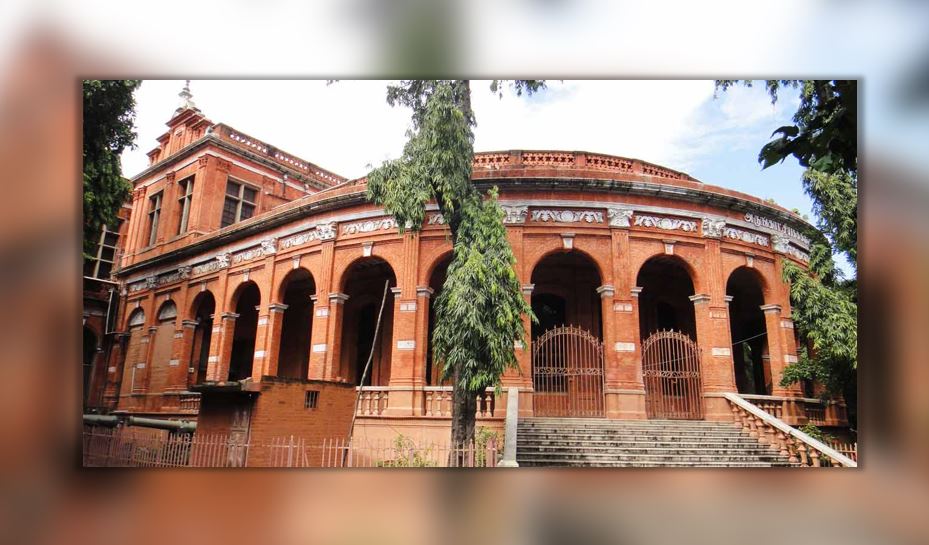
This essay (and a few subsequent ones) rely on the work by J.Raja Mohamad, assistant director of Museums, of the Government Museum in Chennai, Tamil Nadu, India. Raja’s book titled Maritime History of the Tamil Muslims: A Socio-Historical Study on the Tamil Muslims 1750 -1900 is published in 2004 by the Government Museum in Chennai.
It is a welcoming piece of narrative on a community much misunderstood in this country. This column assumes to be a lengthy review essay on a subject that is historically, culturally and intellectually pertinent in fathoming the dynamics of the nation.
In his Introduction, Raja emphaticslly reminds us that that Muslims who settled on the coastal towns of the Coromandel “speak Tamil and Tamil is their mother tongue.” Their progenitors were Arab merchants and navigators who settled in the port towns of the Coromandel region from the eighth century.
From there they continued their mercantile activities. It should be known that the Coromandel coast was studded with ports such as Porto Novo, Nagapattanam, Nagore, Karaikkal, Mandapam, Vedalai, Kilakkarai and Kayalpattanam (I am faithful to the spelling used in the book).
The ports serve as crossing points to Ceylon, Malacca and other islands in the Malay Archipelago. Facilities were offered and extended by local rulers and authorities in view of the profits from such trade contacts.
When Arab traders settled in the Coromandel region, families and communities flourished. Their offspring continued the seafaring tradition as navigators, shipowners and merchants. As an example I recall a document about my grandfather Ahamad Marican (d. 1934) which states his occupation as ‘Textile Merchant,’ inherited from his ancestors, as told by my father.
The mercantile population further swelled, forging the Coromandel Muslim society, influenced by Islam and the efforts of Sufi missionaries.
Raja describes the Muslim mercantile community as wielding enormous powers in the courts of the local rulers and performed yeomen service as mariners, administrators and guardians of the sea coast:
“They rule the waves of the Indian Ocean till the fifteenth century and they also established a network of overseas depots and branches in Ceylon, Malacca and other Eastern countries” (p.4).
Then began the Vasco da Gama epoch. His arrival through the Cape of Good Hope inflicted a severe blow to the commercial activities of the Tamil Muslims – as well as to the Hadhramis and Arabs, and littoral communities on the arc of the Indian Ocean in the beginning of the sixteenth century.

Potuguese, and Dutch and English presence proved fatal. The Indian Ocean civilization celebrating the freedom of the seas was disrupted by the monopolistic and restrictive trade policies of the Europeans. The English eventually became the master of the Coromandel by 1800. The maritime dynamism of the Tamil Muslims gradually declined to insignificance by the 1900s.
Raja embarks on the study of the maritime history of the Tamil Muslims between 1989 and 1995 as a research fellow at Pondicherry University (now Puducherry). In this course of his research, he was awarded the UK Visiting Fellowship and Small Study Research Grant in 1995 by the Nehru Trust for Indian Collections at Victoria and Albert Museum (London) to study on the ‘Coromandel English Trade.’
He consulted the archives and major libraries in the United Kingdom, as well as a large number of records in the India Records Office, London, and materials from the British Museum, Oxford University and Cambridge University.
For the benefit of researchers and scholars, I am also listing down the following libraries and their holdings consulted by the author of this work. These are the University of Madras, Tamil University Thanjavur, Institute of Objective Studies New Delhi, Jamia Millia Islamia University New Delhi, Pondicherry University, Bharathidasan University Tiruchirappali, Nehru Memorial National Library New Delhi, Saraswathi Mahal Library Thanjavur, Islamic Studies and Cultural Centre Chennai, French Institute of Indology Pondicherry, World Tamil Research Centre Tarameni Chennai, The Mussalman Library Chennai, District Central Library Chennai, District Library Pudukkotai and Connemara Public Library Chennai. The Ports and Registration offices in Tamilnadu were also consulted.
The author of Maritime History of the Coromandel Muslims tells us of his field work along the stretch of the Coromandel Coasts from Pulicat to Colochel. There he interviewed a cross-section the Muslim population, especially a large number of Marakkayars. He mentions a few of them, namely Capt. N. Amir Ali, Mohamed Sherieff, Dr. S.M. Kamal, M. Abdul Jahhar Merakayar, Syed Ibrahim Marakkayar, Ashraf Abdul Rahman, Buhari. S.M.A., Basheer Marakkayar, Prof M. Sayahu Marakkayar, M. Jaffar Muhaiyadeen Marakkayar, Mohamed Kasim Marakkayar, Jinna Marakkayar, Sulaiman Marakkayar, M.L. Shaikuna Lebbai and Maruff Marakkayar.
Raja also refers to the Coromandel-Sri Lankan maritime Muslim communities. Indeed, the history of the Indian Muslims, and their proximities must be given a new thrust. It provides a social and cultural history of a people much understated in global trade and culture. The links between the Malay Archipelago and southern Indian regions of the Coromandel (and the Malabar) coasts, need a new attiude and a fresh perspective.
In his Forward, L.S. Vishwanath, Professor and head of the Department of History, Pondicherry University, refers to the maritime studies perspective in Raja’s study. The world of the Indian Muslim merchants of the Coromandel coast is an important contribution to Maritime, as well as to community studies.
According to Vishwanath, we are told of the role of the Tamil Muslim merchants in the urbanization and economic development of the Coromandel coastal towns such as Kilakarai, Kayalpatnam, Nagore, Pulicate and Nagapatnam. The towns “ came to be known as formal centres of Islam in South India” (Foreward xii).
Apart from shipbuilding and overseas trade, Tamil Muslim merchants were also patrons of Dargahs, which had tombs of mostly Tamil Sufi saints, encouraged the development of Arabic Tamil (Arabic in Tamil script, called Arwi), lexicon, prose and poetry in Tamil, and were also philanthropists. There was cultural fusion as evidenced from dargah construction in the Dravidian-Islamic style.
Trade and religion coexist in the Coromandel maritime world. Islamic missionaries and mystics who followed the Muslims traders have contributed to the conversion of the coastal communities. Often the traders themselves were missionaries. It is significant to note that trade contacts of the Coromandel coast with Islam goes back to at least the 8th century.
Arab traders brought in their horses and merchandize. Bear in mind that this was prior to the Muslim arrival in north India and the establishment of the Delhi Sultanate. Even when the Tamil Muslim merchants of the Coromandel faced a decline in their fortunes to the the European monopoly, beginning 1772, the English trading company in Kedah and Acheh had to reckon the influence of the Coromandel Tamil Muslim mercanmts in the Courts of the two kingdoms in the Malay Peninsula and in Sumatra respectively.
The Tamil Muslims of the Coromandel had a marked presence as a community in places like Penang and Acheh where they were known as Chulia (Cholia) Muslims. Where the ‘Cholia’ is said to be derived from Chola. Their presence increased due to migration, as a consequence of their decline in maritime trade in the 18th and 19th centuries.
Leave a Reply