

KULAI: Diabetes is one of the most common non-communicable diseases and a major public health concern not only in Malaysia but also around the globe.
Despite advances in medication and treatment, it remains a challenging disease to be managed successfully. As such, the illness and death rates continue to rise.
At least 15.5 %, or more than five million of the Malaysian population are living with chronic kidney disease (CKD), and only 5 % of them are aware of it. Approximately 28 individuals in Malaysia are diagnosed with kidney failure every day and need dialysis to live.
The health Ministry has projected that more than 106,000 Malaysians could be on dialysis by 2040 if the upward trend in kidney failure rates persists.

With just 16 years remaining, urgent action is imperative. Also, each year, over 10,000 individuals are diagnosed as needing dialysis, and this number is steadily increasing, with more than half having diabetes.
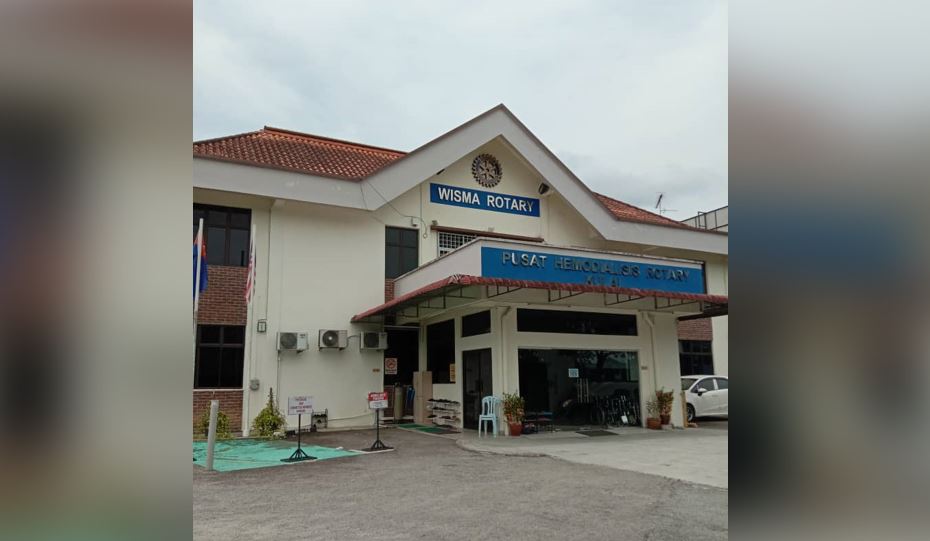
28 years ago realising a rise in diabetes cases, the Rotary Club of Kulai (RCK), set up the Kulai Haemodialysis Centre (KHC) at a rented premises in Kulai Besar.
It started with four dialysis machines and six patients managed by three dialysis staff. In 1997, the Centre was relocated to their own three storey building on a piece of land at Taman Bintang in Senai donated by a well-known philanthropist Datuk Yap Sing Hock.
President of The Rotary Club of Kulai Foundation Amber Goh Pin Xin said the centre has 67 patients with 18 dialysis normal machines operating.
The centre also operates one hepatitis C dialysis normal machine and 12 standby machines. Managed by 16 trained staff, they operate two shifts in order to accommodate the ever increasing number of patients.
According to Amber the day to day operation of the KHC is managed by an administration manager under the supervision of the board of directors of Rotary Club of Kulai Foundation, which is made up of a team of Rotarians through election every year.

She also pointed out that the centre is running on a deficit of RM60,000 to RM70,000 a month, of which the administrative expenses takes a large portion.
“We only charge RM110 for each patient under the Kementerian Kesihatan Malaysia and those who have Socso, they are eligible to claim RM130 per trip,” she said.
Not mincing her words she said the actual operation cost is RM150 for each patient as the balance is subsidized by the centre.
She also stressed that the money collected is used for operational cost.
She also mentioned that the Centre received a feather in its cap when in 2005, it acquired tax exemption status from the Ministry of Finance. Another compliment is the centre obtained the licence to operate from the Ministry of Health.
“After more than two decades, the centre constantly needs to phase out and replace old machines due to nearing of life span which is about five years,” she said.
New machines, she said cost about RM45,000 and there are other facilities to maintain and upgrade to improve quality of dialysis treatment.

“The centre’s primary objective is to help and relief end-stage renal patients who are unable to access at government hospitals or cannot afford the high cost of dialysis treatment at private hospitals,” she affirmed.
However, she affirmed that the centre would continue to assist the needy with quality but affordable dialysis treatment.
She added that a nephrologist from Seremban visits the Haemodialysis Centre once in three months and checks on the patients.
Amber appealed to the public for their generous financial assistance to aid them to continue assisting the unfortunate renal failure patients. Those wanting to get assistance may contact Jerry Lau at: 010-765 2093.


Leave a Reply