
By Hanaa Naji Saleh Samaha
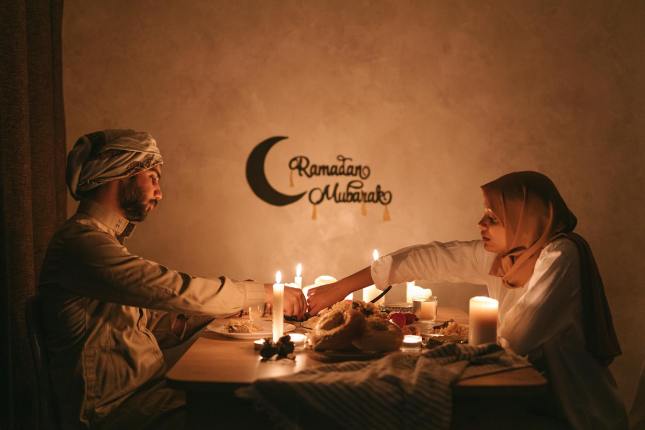
WHILE Muslims all over the world share the same practices of abstaining from food, drink, and other physical pleasures from dawn until sunset, Ramadan remains different regarding the cultural practices that create unforgettable Ramadan nights.
I have been in Malaysia for more than seven years and during this period, I have noticed distinct cultural traditions and customs in Ramadan that, while differing from other countries, add a unique flavour to its days.
First, believe it or not, Malaysian women have the option to take occasional breaks from cooking. I was surprised when I came to know this, though I did like it. I do not remember that I have ever taken one day off from cooking during Ramadan, back in my hometown in Yemen.
Unlike Arabic women who are tied to the kitchen all day during the holy month, preparing different types of food for their families, Malaysian women can take some days off from cooking. They may even accompany their husbands and children to the masjid and enjoy iftars with other women at the same time.
As a result, food is not wasted because people consume the portion offered to them. Unfortunately, this is not the case in most of the Arabic world where plenty of the Arab proverbial feast is left on the table.
Second, iftars in the masjids are not restricted to the underprivileged, unlike in Arab countries. Malaysian people of different social backgrounds are accustomed to gathering to break their fast in the masjid.
Therefore, people from all walks of life, whether rich or poor, educated or uneducated, share equally in their spiritual practices and express their gratitude and appreciation for Allah’s endless blessings.
Third, individuals are required to work full-time even during Ramadan. I found it surprising that workplaces do not grant any exemptions or reduction of working hours despite fasting for more than 12 hours.
Despite the physical and mental strain of fasting, employees are expected to maintain their regular workload and productivity levels throughout Ramadan. At universities, even postgraduate classes are scheduled in the evening, and students are allowed to pause and break their fast before resuming.
Fourth, a distinctive tradition observed in Malaysia is the food bazaars popping up at every corner of the country. In these bazaars, Malaysians have an incredible variety of dishes available, such as the traditional Malay dishes like nasi lemak, rendang, and various kuihs; the Indian-Muslim specialties such as roti canai, martabak, and biryani; the Chinese treats like dim sum and noodle dishes; and not to forget the Middle Eastern delights like Nasi Arab, falafel, and shawarma.
Finally, another unique cultural practice that attracted my attention in Malaysia is that the pre-dawn meal (sahur) is also offered in some of the masjids. Therefore, some people might spend less money during Ramadan as a result of such communal gatherings for iftars and sahurs held every day in the Masjids. What a savings!
On the other hand, I believe that if Malaysians were to experience Ramadan in the Arab world, they would undoubtedly find the culture captivating. For example, they would relish the aromas of various foods being prepared in homes while walking in the streets.
Another unique tradition is the cannon blast signalling the start of iftar. During earlier times, the cannon blast was used to announce the momentous occasion of iftar across vast territories.
Nowadays, this tradition has become a ritual associated with Ramadan in all Arabic countries. Besides, outsiders would be mesmerized by the lanterns, known as ‘fanous’, that adorn streets, homes, and masjids during Ramadan in many Arab countries.
Those lanterns symbolize the Arabs’ extreme joy upon receiving this month and the spiritual nights of Ramadan. Another tradition considered unique in the Arab world is Iftar tables spreading out onto the streets.
As the sun begins to set, the families, neighbours, and even strangers alike gather around long tables set up in public spaces to break their fast together, reflecting the generosity and hospitality deeply ingrained in the Arab culture.
I must admit, irrespective of whether traditions are perceived as positive or negative, the diversity of cultural practices from one country to another should not cloud the big picture of understanding the true meaning of Ramadan.
Such cultural diversity should strengthen our bonds rather than weaken them; unite us rather than divide us. It should not change the sacred essence of Ramadan in seeking the purification of hearts and minds and engaging in collective acts of worship.
Since the word Ramadan originates from an Arabic word, Ramaḍa, which means scorching heat, let us hope that Ramadan embodies a cleansing fire recurring annually to offer a spiritual renewal.



Leave a Reply