

THE ‘Raja Rum’ an iconic figure to the Malays, representing East and West. Rum represents a revered, an almost sacred realm in the traditional Malay psyche. For example, in the later part of Hikayat Hang Tuah, we find that Melaka had become a significant power in the region and wanted to establish relationships with the great powers of the negeri di atas angin (lands above the wind) such as Rum, Eqypt and Makkah.
Accordingly, it has been narrated that Hang Tuah led missions to Majapahit, Kalinga, Brunei, Acheh and Rum. On a few occasions he, or other representatives of the Sultan, bought gems and elephants, to reflect their prosperity and, of necessity, purchased weapons from Rum.
This essay is not concerned with actual events, but with the image and tales from the narrative impinging upon Malay consciousness over some seven centuries.
Many would have interpreted this from the Ottomans. An introduction to the Hikayat Hang Tuah epic celebrates the spatial conception of his prowess. It portrays Hang Tuah as a much respected statesman in the various polities of the Malay Archipelago, and also that of “Byzantium, the outpost of Rome.”
Although reference was made to Byzantium, then Constantinople, Rum also refers to the region of the farthest extent of Hellenism and the “Occidental” reach in Asia. And this would stretch until the regions on the north of the Indian sub-continent. Perhaps a rereading of Rum as narrated is inevitable to in order to delve into Malay worldview.
At this point I am inclined to initially cite the first paragraph of a 2007 essay written by Cemal Kafadar, professor of Turkish Studies and Ottoman historian titled “A Rome of One’s Own: Reflections on Cultural Geography and Identity in the Lands of Rum.”
When writing of the Ottoman forces vanquished near Ankara in 1402 by his patron, Timur, the chronicler Nizamuddin Sami mentions the Efrence (Frankish, Eurochristian?), presumably implying the forces under the command of the Serbian king, an Ottoman vassal, but reserves most of his disparaging remarks for the Rumiyan, that is, Turkish-Muslim soldiers serving Sultan Bayezid. To add injury to insult, he cannot resist the temptation to cite the second verse of the sura al-Rum (Qur’an 30), “The Romans [i.e., the Byzantines] have been conquered (Kafadar, 2007).
Kafadar comments that many learned and presumably not-so-learned Muslims of Asia Minor knew the verse well, as did others in the rest of the Muslim world, but saw nothing wrong with identifying themselves as Rumis, or people of the lands of Rum.
Geographically, the term ‘Seljuk Anatolia’ is standard usage in referring to a period of more than two centuries before the beginning of the story of the Ottomans around 1300. A “beylik (emirate, principality) period is recognized but almost always located within the orbit of the rising Ottoman state.
It is also conventional to move straight into a narrative of ‘Ottoman Anatolia,’ at the turn of the fourteenth century. Kafadar reckons that from about the 1000s to 1300, the Seljuks of Rum, as they were called in their own time, and for many centuries thereafter, ruled over a relatively unified Turco-Muslim Anatolia for only a few decades during that period. Kafadar suggests ‘Seljuk Anatolia’ as a more elegant description.
As early as the late twelfth century ‘Turchia’ appears on a Latin map as a caption on Asia Minor, a harbinger for future European-language usages such as ‘Ottoman Turkey’ or ‘European and Asiatic Turkey,’ all the way until the twentieth century. Ibn Battuta’s 1330’s account of Anatolia introduces the region as barr al-Turkiyya al-ma’ruf bi-bilad al-Rum (the Turkish land known as the lands of Rum).
The word ‘Rum’ or diyar-i Rum for defining a cultural as well as physical space (the lands of Rome, limited over time to the eastern Roman lands, i.e. Byzantium) was adopted from earlier Arabo-Persian usage but now stretched by Turkish speakers to refer to the zone that they inhabited and in large part also governed.
So words like ‘Rum’ and ‘Rumi’ were in common currency among some of those people and moved seamlessly into old Anatolian Turkish.
‘Istanbul’ too, predates 1071. It is mentioned as early as in the tenth century by the Arab polymath al-Mas’udi (d.955). ‘Rumi’, by the thirteenth and fourteenth centuries became a loan word. ‘Rumi’ came to be adopted by, or used with respect, to some Muslims of that geography, perhaps at first by outsiders but eventually also by insiders.
Mevlana Celaleddin-i Rumi (d. 1273), better known as Jalaluddin Rumi, is the best known example, as he is invoked today simply as ‘Rumi’ by millions of modern readers around the world. Rumi was called Mevlana-i Rum (our maser [who is] of [the lands of eastern] Rome) The heirs to the heritage of the lands of Rum prefer to refer to him as Mevlana, since they know of several other Rumis.
There is also a distinction between Rumi and Turk – the former speaks Turkish and acquire their social identity within or in some proximity to urban settings, professions, institutions, education, and cultural preferences, as opposed to the latter, a usage that primarily had associations of ethnicity-not transcended and attachment to tribal laws and cultural codes.
Rumi vs Turk resonates a social class distinction similar to ‘bourgeois vs rustic.’ The Rumi identity was differentiated but not necessarily detached from its Turkish counterpart.
Rumi is not a formal signifier of the Ottoman administration. Rumi refers to the province of Rum (central and east central Anatolia); or Rumeli, referring to Ottoman lands west of Istanbul.
Rum, and Rumis, the latter identified as seafarers and warriors in the Ottoman State, had an impact in the regions as a diasporic group exercising their professions from West Asia through India, through the rantau of the Malay Archipelago – the Tanah Air.
This geographical and cultural concept and environment, was diffused to refer to a group of people classified as such. ISTAC-IIUM scholar Dr. Mehmet Ozay in his book titled The Ottomans and the Malay World Relations, notes that the Turks are known as the major actor in Central Asia, through successive waves of migration generally from the 5th century onwards.
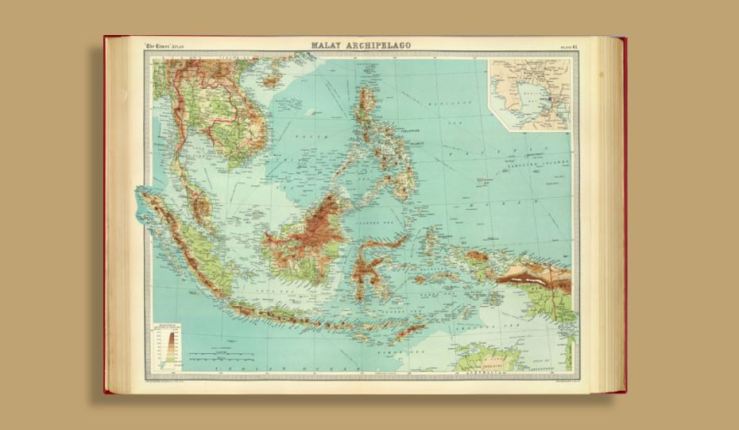
These movements are in regions adjacent to the Indian Ocean, in which is located the Malay Archipelago on its eastern side. Ideas on Rum and the Rumi crossed the Indian Ocean to the Malay Archipelago. Subsequently Rum and the Rumi epithets than emerged in the various texts in the Malay World, in particular through the Indo-Persian world.
We find Rum and Rumi in Minangkabau and Aceh texts, as well in the narratives of the other parts of Sumatra, extending to Java and Sulawesi.



Leave a Reply