
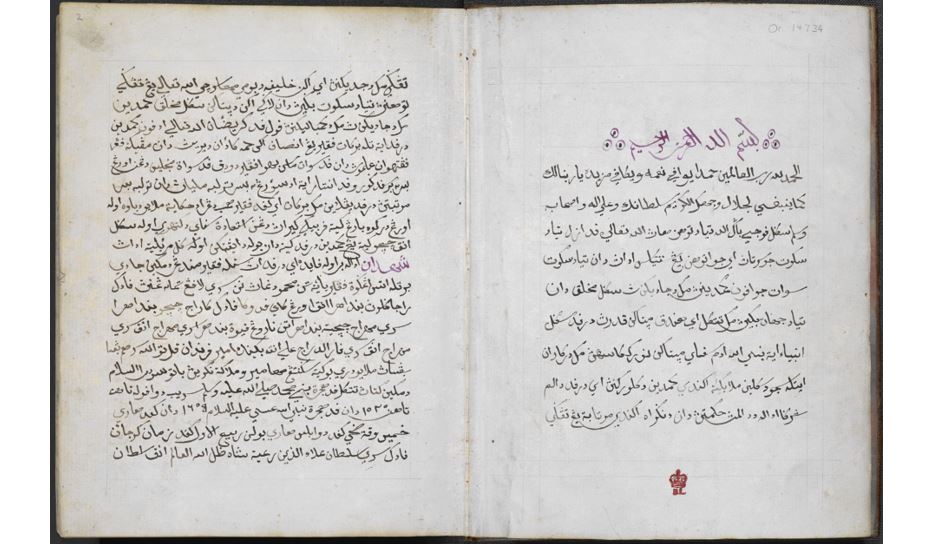

WHEN the Malayan Communist Party turned into nationalists and heroes, when Parameswara was deemed a Hindu throughout his life, when Hang Tuah was deemed a Chinese; or argued as a fictional character (based on one account, only Hang Tuha existed) the country needs to reexamine the narration of its past by its constituent population.
The representation of Malaysia’s history over almost three decades has become problematic. Much of what has been accepted as received knowledge have since being contested.
Knowledge of the nation’s history is ethnicized; much like the discourse on the New Economic Policy (NEP). Each ethnic group has its own history, traditions and world views. Bearing in mind ever emerging contested narratives, it is imperative for society and the present generation to understand the many perspectives.
As such, the history of Malaysia, it has been argued, was “never neat” as various versions and perspectives on the nation was presented, re-represented to and consumed by the public. The growing interest in the passing of historical knowledge had created new dimensions of interpretations of the past.
There are many, too much to account in this essay. As an example, new narratives, such as that on Melaka has emerged over the last few years.
Dennis De Witt’s Batu Nisan dan Kubur Bersejarah di Bukit St. Paul (2023), C.O. Blagden’s The Medieval Chronology of Malacca (2023) and Allein G. Moore’s The Story of Malacca: Sultans and Spices, Guns and Greed, Race and Religion (2022) are such narratives, perhaps described as “retrospective accounts” on the fascination for Melaka.
Some years ago in August 2019, a conference titled “Melaka in the Long 15th Century” was held, bringing together scholars from all over the world who presented their recent works and discoveries on Melaka history, including related old Malay, Arabic, Persian and Chinese texts.
The conference led by the organization, Melaka in Fact, seeks to investigate, document and disseminate the many histories of the cosmopolitan past of the Melaka Sultanate, society and entreport.
Unlike the British, the Portuguese and the Dutch were only interested in monopolising trade. Under British colonialism, they used Divide et impera or in the sciences of politics and sociology, “divide and rule” or “divide and conquer” policy. The coming of the British had transformed the history of Malaysia as they altered and shaped ethnic, and religious narratives through their policy.
The plural society turned into a culture divided along labour lines. As the late social anthropologist, Zawawi Ibrahim wrote in 1997, “it was the subsequent elaborations by colonialism upon this ’initial pluralism’ (pre-colonial pluralism) which gave rise to the ethnicism and competing ethnicities currently inherited by the modern Malaysian nation-state.”
In the British Malaya, different ethnic groups were not allowed to intermingle with each other, instead they existed mainly within their own ethnic spheres. The policy introduced by the British was to benefit themselves and not the rest of society. The British only created a symbolically plural society, which caused each ethnic group to identify itself with its motherland.
The “divide and rule” policy caused all the ethnic groups to freely practise their religion, and celebrate their own stories. The Sultans acted as the symbolic rulers. Under colonial conditions, the sultans were conferred the position “protectors of Islam.” The British reinstated the Sultan’s role, i.e., to ensure that Malay culture and the religion of Islam were not disparaged in the midst of this influx of other cultures and religions.
Meanwhile, the Chinese-dominated merchant community thrived. A network of capital and credit were established. The two systems co-existed. The Chinese and the Malays existed along parallel lines through 1957. The May 1969 incident disrupted the social, political and cultural order. The May 13 episode created a new normal. It changed the national landscape, and the zeitgeist of the nation.
National society was restructured – there was a reboot, especially in the socio-economic sector. Political and cultural rearrangements were executed with a new world view on nation-building – a twin-pronged policy of eradicating poverty in the restructuring of society. It saw the beginnings of a new national narrative, an “intervention” to history.
This was the New Economic Policy (NEP), the ‘mother’ of all public policies in Malaysia. Its effects are still felt and seen to this day. The framework of the NEP re-established public policies. The national narrative was reinstated.
The end of the Cold war (fairly coinciding with the end of the NEP program) again affecting the Malaysian political and intellectual landscape. The Communist Party of Malaya was defeated in 1989. The Cold War formally ended in 1991. Hence the Communist ideology, seen to be no longer a threat to the nation, was disbanded. Books on communism and the communist struggles were easily accessible in the market.
During that time too, books by and about members of the Communist Party of Malaya, initially published elsewhere, but subsequently published locally were celebrated by certain segments of the Malaysia population.
This coincided with the ease in which society can produced and reproduce view, opinions and ideologies through the internet. Remember, the Internet became a social technology in 1996. It created yet another disruption, another new normal.

At the same time, the triumph of democracy and capitalism ushered a new sense of liberalism, freedom and expression. Multiculturalism and diversity were celebrated. Ethno-centrisms re-emerged in many ways. Entrenched identities manifest their avatars through many platforms.
Hence, what has perhaps been accepted as a Malay-centric, with some using the term UMNO-centric view, not to mention the monolithic Eurocentric basis of history began to have competitors. The once ‘Malay-centric view of Malaysia,’ as represented in school history textbooks and a number of history and historiographical writings could not be contained much longer.



Leave a Reply to Contesting national narratives: Disruptions, texts and contexts – BebasNewsCancel reply