
Synopsis:
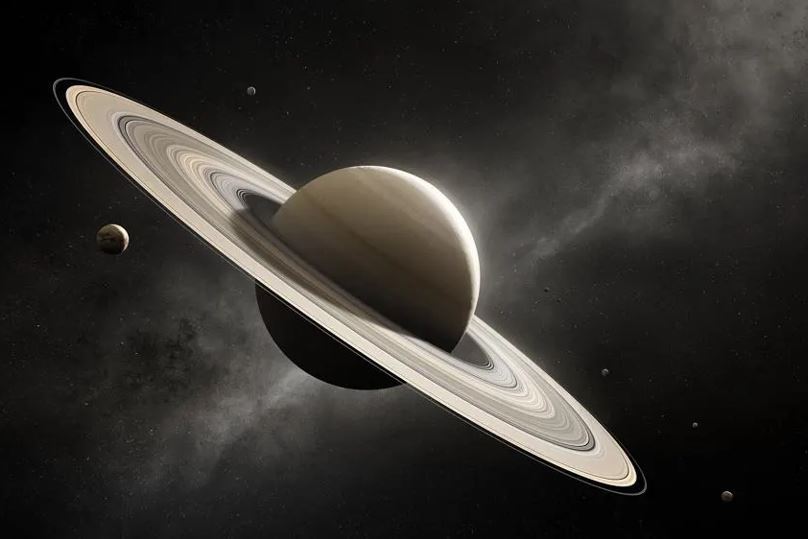
Saturn, the awe-inspiring planet adorned with its distinctive rings, is poised to illuminate the night sky from Sunday onwards. Here’s till when you can enjoy the celestial spectacle.
Two astronomical events are awaiting stargazers in Thailand and South-East Asia on Sunday night and on Wednesday night (Aug 30), the National Astronomical Research Institute of Thailand has announced.
Saturn will reach its nearest point to Earth for the year on Saturday night, and the moon will follow suit on Wednesday.
Saturn, the sixth planet in our solar system, is expected to grace the heavens with its most remarkable display in 2023 during this weekend. As the weekend unfolds, Saturn’s position in relation to Earth and the Sun will reach an optimal alignment.
This unique occurrence will result in the gas giant’s peak brilliance and size for the year, offering a visual spectacle that’s bound to capture the imagination of skywatchers.
The Sun, Earth and Saturn will align on Sunday, bringing Saturn to a mere 1.31 billion kilometres from the Earth, said the institute’s director of communications, Suparerk Khaehanon.
If the sky is clear, Saturn will be visible to the naked eye from eastern Thailand from after sunset until dusk on Monday, he said, adding that Saturn’s rings and moons can be observed by telescope.
From Wednesday until Thursday morning, the moon will be just 357,334 kilometres from the Earth, creating the second blue moon this month.
The full moon will appear about 7% larger and 15% brigther than usual, Suparerk said.
Peak visibility for the blue moon will be vin the East from shortly after 6pm, Suparerk said.
Members of the public are invited to observe both astronomical events at the institutes four main observatories: the Sirindhorn Astronomical Park in Chiang Mai’s Mae Rim District, and the observatories in Nakhon Ratchasima, Songkhla and Chachoengsao.
Both events will also be live-streamed on the institute’s Facebook page.
The Perfect Cosmic Alignment
The celestial show is attributed to the exquisite alignment of Earth, Saturn, and the Sun. During this period, Saturn will find itself in direct opposition to the Sun, with our planet situated in between. Adding to the spectacle, Saturn will reach its perigee, its closest proximity to Earth. The combination of these celestial dynamics will transform Saturn into a radiant beacon in the night sky, captivating onlookers with its radiant glow.
Saturn’s Reign Continues
This celestial extravaganza is not a fleeting moment. Saturn’s brilliance is poised to grace the night sky through February 2024, providing ample opportunities for sky enthusiasts to witness its enchanting display.
Guide to Witnessing Saturn’s Splendor
According to Space.com, the prime viewing window occurred around midnight in North America, with the peak moment of Saturn’s brilliance around 4:20 am EDT (8:20 GMT or 1:50 pm IST) on Sunday.
With a magnitude of 0.4 at the moment of opposition, Saturn will shine brightly, making it easily discernible to the naked eye. Even so, using binoculars can enhance the experience, revealing more intricate details and potentially showcasing the planet’s pale yellow hue.
High-power binoculars might even unveil faint traces of Saturn’s majestic rings or offer glimpses of its largest moon, Titan.
Unlocking the Marvels Through Telescopes
For a truly immersive experience, telescopes are the key. As one gazes through a telescope’s lens, Saturn’s magnificent rings will come into sharp focus. The planet’s rings are in the process of tilting towards Earth’s line of sight, a trend that will continue until 2025, as confirmed by NASA.
Navigating the Celestial Landscape
To locate Saturn in the expansive night sky, direct your gaze toward the Aquarius constellation, where Saturn currently resides. For observers in the northern hemisphere, seeking a clear view of the southern horizon will optimize the chances of spotting Saturn’s celestial brilliance. – The Nation Thailand/ANN/economictimes




Leave a Reply