
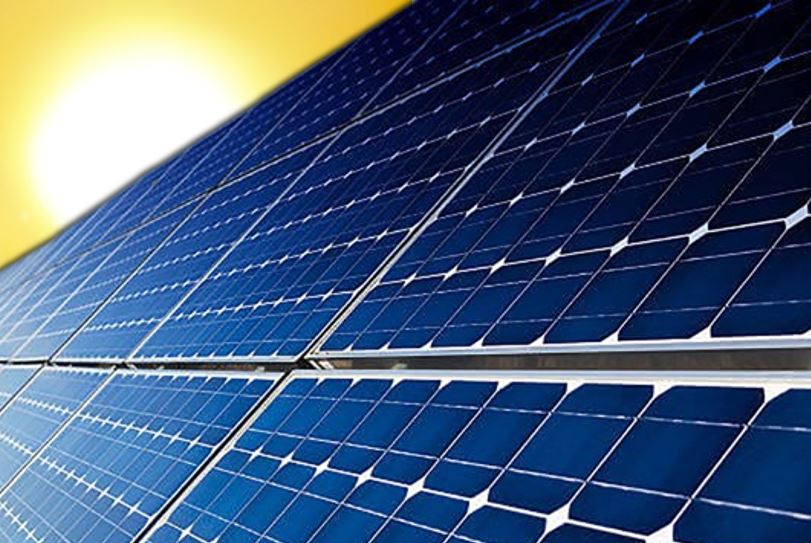
The United States (U.S) on Friday finalized a decision to impose import duties on solar panel makers who finished their products in Southeast Asian nations to avoid tariffs on Chinese-made goods, according to a senior Commerce Department official.
The decision, which largely mirrors a preliminary finding the agency made in December, was opposed by buyers of solar panels that rely on cheap products made overseas to make their projects competitive.
But it is good news for the small U.S. solar manufacturing industry, which for years has struggled to compete with Chinese goods and is enjoying renewed investment due to subsidies in U.S. President Joe Biden’s landmark climate change law.

The Commerce probe found that units of Chinese companies BYD, Trina Solar, Vina Solar and Canadian Solar were dodging U.S. tariffs on Chinese solar cells and panels by conducting minor processing to finish their products in Cambodia, Malaysia, Thailand and Vietnam before shipping them to the U.S. market.
Those countries account for about 80% of U.S. panel supplies.
Malaysia recently lifted an export ban on renewable energy, as it aims to position itself as a regional leader in the sector. The move allows local companies to develop capacity at scale and fulfil regional demands.
The Commerce will also impose duties on New East Solar because it refused to cooperate with an on-site audit of its operations in Cambodia, the official said.
Other companies operating in those nations have the ability to pursue a certification process to show that they are not circumventing tariffs. To become certified, solar cells and panels must contain non-Chinese wafers and three other key components.
The United States has had anti-dumping duties in place for a decade on Chinese-made solar products after a Commerce probe found Chinese companies were receiving unfair government subsidies that kept their prices artificially low.
The companies and others will face the same duty rates the United States already assesses on their Chinese-made products.
They will not kick in, however, until June 2024, thanks to a two-year waiver from Biden that was intended to ensure ample panel supplies while domestic manufacturing ramps up.
The solar industry on Friday (August 18, 2023) said the Commerce decision will jeopardize the boom in solar manufacturing spurred by the Biden administration’s Inflation Reduction Act.
“The U.S. Department of Commerce is out of step with the administration’s clean energy goals, and we fundamentally disagree with their decision,” said Abigail Ross Hopper, president of the Solar Energy Industries Association.
Trina Solar, which says it has invested hundreds of millions of dollars in cell and module production in Thailand and Vietnam, criticized the Commerce decision.
The move will increase the overall costs of “virtually all” U.S.-bound solar products “because it will constrain supply at a time when the demand for solar is skyrocketing,” it said.

On Tuesday, top U.S. solar panel maker First Solar (FSLR.O) said an audit of its manufacturing operations had uncovered unethical labor practices at its Malaysia factory, sending the company’s shares down about 5%.
The revelation is the latest to tie the fast-growing solar energy industry to concerns about forced labor.
First Solar has largely evaded that scrutiny because its panels do not contain polysilicon, a raw material primarily produced in China’s Xinjiang region. A new U.S. law presumes that all goods from Xinjiang are made with forced labor.
In a corporate sustainability report, First Solar said four onsite service providers in Malaysia had subjected migrant workers to unethical recruitment practices, including “the payment of recruitment fees in their home countries, passport retention, and the unlawful retention of wages.”
First Solar said it had taken steps to return passports, wages and recruitment fees to the affected workers.
“The solar industry must hold itself to a higher standard,” the report said. “Quite simply, our industry’s work to power the energy transition and enable the fight against climate change does not serve as credits to offset its social and human rights obligations.”
First Solar also produces panels in the U.S. and Vietnam, and is planning to open a factory in India. The company’s shares were down 4.9% in afternoon trade at $201.00.
The Malaysian government on 2021 announced that solar power giant Risen Energy Co. Ltd, a private Chinese company, would invest 42.2 billion ringgit (U.S. $10.1 billion) from 2021 until 2035 in its first major plant in Southeast Asia. It will be located in northern Kedah state.
More than 90 percent of all solar panels producing electricity need polysilicon – the purified variant of the grey silicon metal made of quartz – and four of the world’s five largest producers of polysilicon are based in China, according to Bernreuter Research, a German research firm. – Reuters/NYT/nikkeiAsia



Leave a Reply