
I couldn’t read Miranda Levy’s The Insomnia Diaries: How I learned to sleep again at night. I speed-read pages midafternoon; reading it too close to bedtime made me think too deeply about my own sleep – or lack of it.
“You’re not the first person to say that,” Levy tells me when I remark that the vivid descriptions of her anxiety about not getting to sleep – or not getting back to sleep – made me fret.
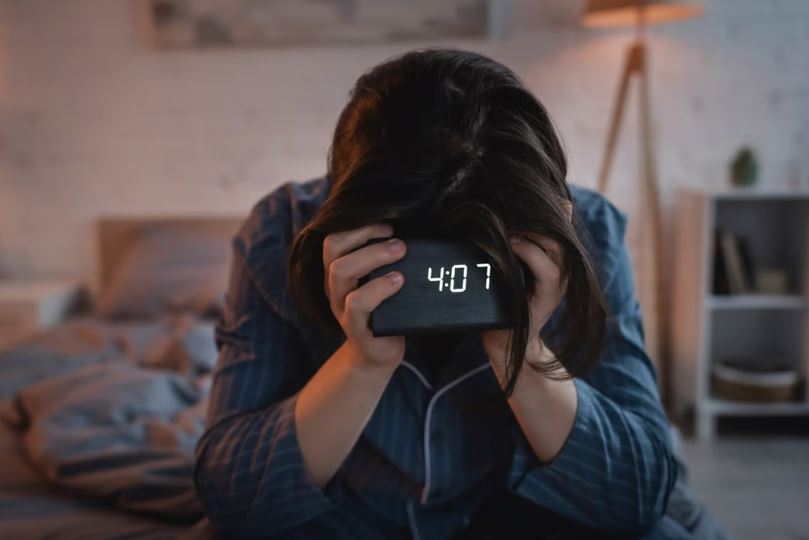
Levy developed grave insomnia after her husband asked for a divorce. She slid quickly from one or two nights of no sleep – which she records in her diaries as “0 hours, 0 minutes” – into weeks, then months, and eventually years of very little sleep.
The insomnia that first stole her sleep robbed her of her work, her social life and her health.
How did it get so bad – a few nights of crippling insomnia ending up as lost years?
Knowing what she knows now, having delved into so much research she helpfully includes in her book, she believes she rushed to see a doctor too quickly.
Levy comes from a medical family – so seeking a medical answer was her default. “I should have spoken to friends first,” she says.

Her doctor prescribed drugs and that prescription, she believes, is what caused the problem to morph into something bigger. She ended up in rehab because of benzodiazepines.
She remembers the first time she experienced insomnia – the night before she took her O level (grade 10) exam in maths. She was so worried about the exam that she lay awake all night.
“I didn’t think it was possible for a person not to sleep,” she recalls thinking as the dawn broke. “It seemed horrifying that this was a thing that could even happen: that you could lie awake the entire night.”
Now that her life – and sleep – are happily back on track, Levy, a senior editor at a big UK newspaper and mother of two grown-up children, doesn’t believe she will ever suffer as badly again.
“I’m much more resilient now,” she says, and she understands much more about sleep. She would not run directly to a medical doctor again, she says. Instead, she advocates CBT-i – cognitive behavioural therapy for insomnia – or ACT, short for acceptance and commitment therapy.
“You have to make friends with your insomnia,” she says. “If you accept you may not fall asleep at 4am, if you stop thinking about it, you may suddenly relax enough to drop off and wake at seven. So much of it is about tricking yourself.”
Insomnia becomes ingrained, she says, “when the problem becomes the problem”. The original problem – emotional upheaval, say – is not the problem in the end. It is the lack of sleep.
Sleep specialist Dr Barry Krakow, author of a number of books on insomnia, including his latest, Life Saving Sleep: New Horizons in Mental Health Treatment, agrees that CBT-i helps more than drugs. He says: “It teaches you to stop losing sleep over losing sleep.”
Gemma Fisk a certified infant and adult sleep coach and CBT-i specialist in Hong Kong, says that CBT-i is becoming more popular in the United States among healthcare professionals as a first line response to insomnia as opposed to medication.
“It is the leading and most effective response to insomnia. CBT-i has a higher success rate than any other therapy and works well for those looking to come off sleeping pills,” Fisk says.
She notes that CBT-i differs from regular CBT, as it is used specifically for those suffering from chronic insomnia that has lasted three months or more.
Fisk relates the experience of a client who had suffered from chronic insomnia for decades.
“He hadn’t slept longer than four or five hours at a stretch without sleep medication since he was a young teen,” she says.
With Fisk’s help, the client looked at his lifestyle, well-being, and previous life experiences, especially those around the time the insomnia became established.
She learned he had been bullied at school, which led him to becoming anxious at bedtime. After their therapy session, she worked out a sleep plan with him. Within four weeks he reported that he was sleeping for an unbroken seven to eight hours every night.
Fisk stresses that CBT-i isn’t suited to everyone – anyone struggling to sleep should seek a professional’s help first, to rule out any underlying sleep disorders.

What is Insomnia, and how do you deal with it?
Sleep apnoea is one, a condition in which breathing stops and starts during sleep. And this – and indeed any obstruction in the airway – does the same thing, says Krakow: it has the potential to cause nocturia, a condition that causes you to wake up during the night to urinate.
It does this because if there’s an obstruction in the airway – which could be a blocked nose, or something structural – it means you aren’t getting the air you need during sleep and that results in a build-up of pressure in the chest cavity.
That pressure, in turn, puts pressure on the circulatory system, and pushes blood back into the heart more quickly than would happen when you’re up and awake.
After several hours at night of struggling to breathe, the heart muscle cells become distended on account of this faster flowing or larger volume of blood.
The heart, in response, throws up a red flag as it thinks it’s gone into fluid overload and it releases a peptide called a natriuretic – a diuretic, which triggers the kidney to produce urine.
Sometimes, says Krakow, men are diagnosed with a prostrate issue because they keep waking at night to use the bathroom, when in fact it could be due to an obstruction in the airway – anywhere between the nose and throat.
Levy says writing her diaries – a memoir of insomnia, but also a deep dive into what works and what doesn’t, as well as the science of sleep – was cathartic.
“I was able to neatly put the whole experience into a little pink and green package and tuck it into my bookshelf,” she says, helping her to close that chapter in her life. – SCMP
- Miranda Levy is a journalist and author of more than 25 years’ experience. Starting out on magazines including Cosmopolitan and New Woman (RIP), she then hacked it at the Daily Mail and Sunday Mirror before heading back to glossies and the launches of Glamour and Grazia.




Leave a Reply