
By: Dr. Zahiruddin Fitri Abu Hassan
It was reported that you can easily spot large (+7 kg) Kelah (Tor Tambra) swimming in the waters deep in the Pahang National Park in the 1990s, and that during the fruiting of their favourite food (a type of dipterocarp known locally as buah marih), these large fish can be seen leaping out of the water to catch the falling seed mid-air.

Fast forward to today, those stories became a ‘once upon a time’, never to be seen again. We need to act now before this magnificent fish disappear from our rivers.
We have also heard stories of wanton greed of anglers, taking out hundreds of these fish in a single fishing trip. Then multiply that number to every single week of the year. Apart from that, the illegal fishing methods like net casting, poisoning and electrocuting, that should not take place in the National Park.
The livelihood of those relying on these fish are becoming harder. The sizes of the Kelah caught now is severely dwindling, due to overfishing and uncontrolled lust of irresponsible anglers, coupled with the lack of enforcement by the park rangers.
I believe there is a way to bring the fish stock back to the sizes of the 1990s, if there is a concerted effort to manage the park access better, and awareness of the anglers that frequents these waters, hoping to fight the pull of the King of Fishes.
20 years plan to restore and maintain fish stock sizes to the way it used to be is possible with the cooperation of everyone. This is how we can do it:
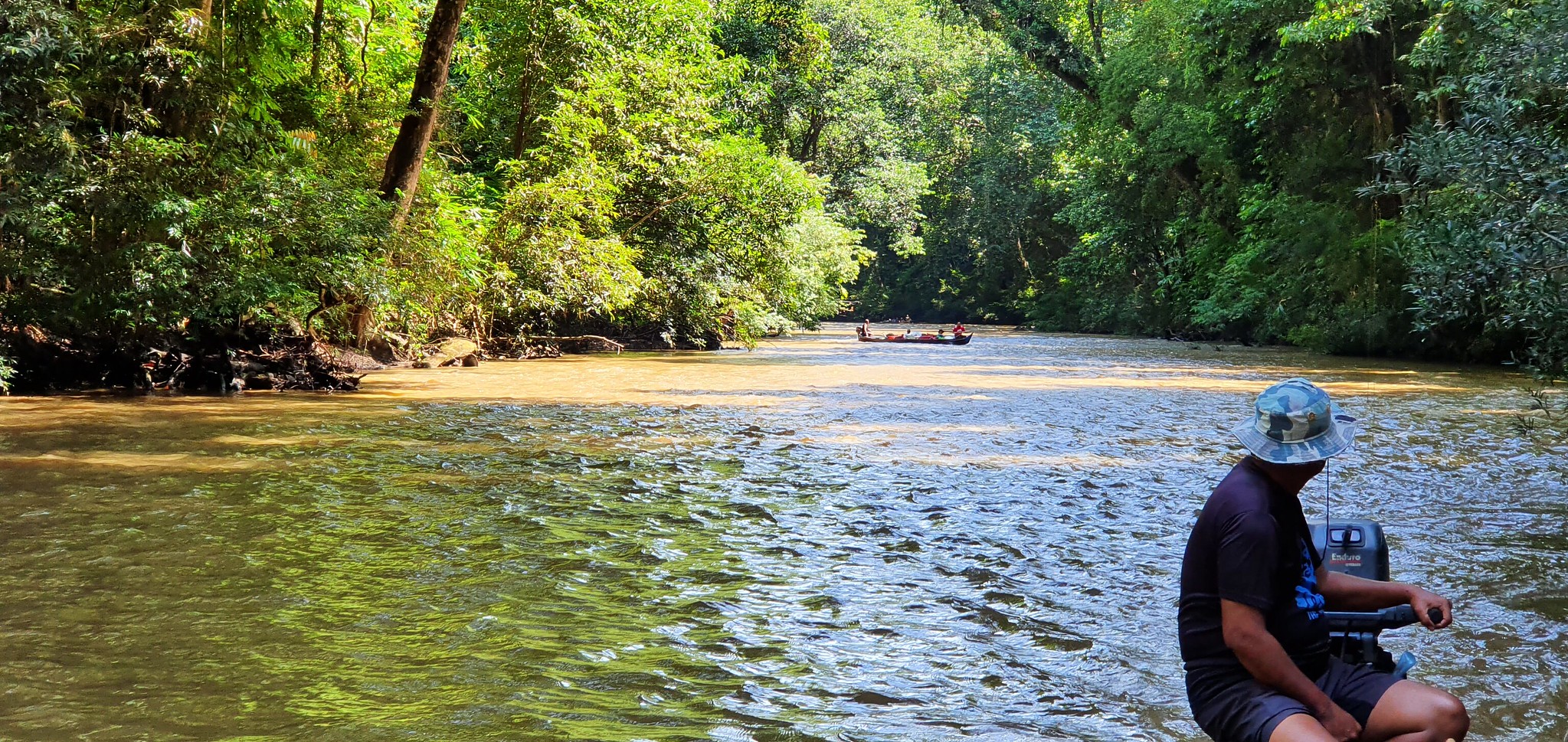
Livelihood of the boatmen. Boatmen like Long Yusree, who depend on the revenue from taking passengers to places like Sungai Keniam and Sungai Sepia must be secured. They are the guardian of these fish, and they need to be able to make a living at the same time. Instead of charging passengers by the head, they should charge by the boat with a maximum capacity of 3 passengers. In order to achieve this, all of the boatman will need to band together in a cooperative, so that they can control the price for the service together, and resist irresponsible anglers who try to take advantage from the small operators.
I dream about them being able to offer packages to see the wild fish swimming in the river, in the middle of the fruiting season, and let those who loves and respect nature, the chance to get a glimpse of the giant Kelah, leaping to catch their food. Then, they would have 2 main customers, those who catch fish (mostly will be local) and those who want watch the fish (these will be tourists, local and foreign)
Anglers. Undoubtedly, these are the main customers of the boatmen. My message to you anglers. Would you wish to be able to feel the pull of the 7kg fish or the 0.7kg fish? Do you want other anglers to feel the same pull of a large fighting fish? So please release them after you are done fighting, take only a single fish to eat, once in your trip. If you want to let your wife or your mom, or the girl you’re dating taste the fish, bring them along for the fishing trip.
The sustainability of the river and the fish stock is in your hands. Do you need to eat every single fish you caught? No. Do you need to bring home every single fish you caught? No. Catch and eat your fish in the National Park. Take no more than that.
Authorities and park rangers. Please make sure enforcement is done. You are the guardian of the park. Take your job seriously. If you need 1 hour to inspect things people bring in to the park, so be it.
Make every single angler to sign a sustainability pact each time they enter, get them to read every word out loud before they sign it, so they are aware of their responsibility.
Increase the fees to go in, by the day. The longer people stay in, the more they have to pay. Control the weight of lures and bait anglers bring into the park. Control and limit the capacity of cooler boxes brought into the park.
These are all measures to make sure people don’t take from the park unsustainably. Finally and again, enforcement is important. Visit those fishing sites.
The government. The multiplier effect from tourism to the economy has been well documented. Planned properly, the Pahang National Park can contribute to the economy of the community for a long time if there is the political will to manage and increase the potential from God’s given resources that we inherited for free.

Lastly in 2040, I expect to be able to go back to Sungai Keniam with the new generation of boatmen who are the true guardian of Kelah, and watch with my very own eyes, the 10kg fish, leaping out from the water to catch the falling dipterocarp seed mid-air.

The author is a Senior Lecturer at the Department of Building Surveying, Faculty of Built Environment, Universiti Malaya, and may be contacted at zahiruddin@um.edu.my



Leave a Reply