

By Rafiq Adikan
1. When my brothers and I were in school, my dad – Abah – had one rule: after homework, study for an hour. Memorise the multiplication tables or read something useful. To our dismay, more often than not, he spot checks us. He will be having his dinner and make us stand within reach of his rattan cane. ‘Hafal sifir!’, he would bark. Being the eldest, I would usually go first. One times three, three. Three times five, 15. Six times seven… my voice would trail off as my brain went blank. I was stuck. Panic ensues. I am dead. My brothers would give me a quick, puzzling look before gazing at the floor. “Abang, you are so in trouble”, they must have thought. The entire house went quiet. Our cats, sensing trouble, scrambled under the sofa. Wide eyed, ears folded back. That older human is most unpleased; they must have thought.
The silence was an eternity. Dear God, please protect this poor servant of yours. I promise to be good. Please.
2. If the prayer was answered, and, nothing else happens, other than a penetrating stare; not that we dare lift our heads, followed by being dismissed; then we knew we escaped death. Many years later, I would joke that ‘General Adikan’ practised another rule: whip first, ask later. Rotan dulu, tanya kemudian. Enforced when those prayers went unanswered! I was smiling when I wrote this. Fond memories.

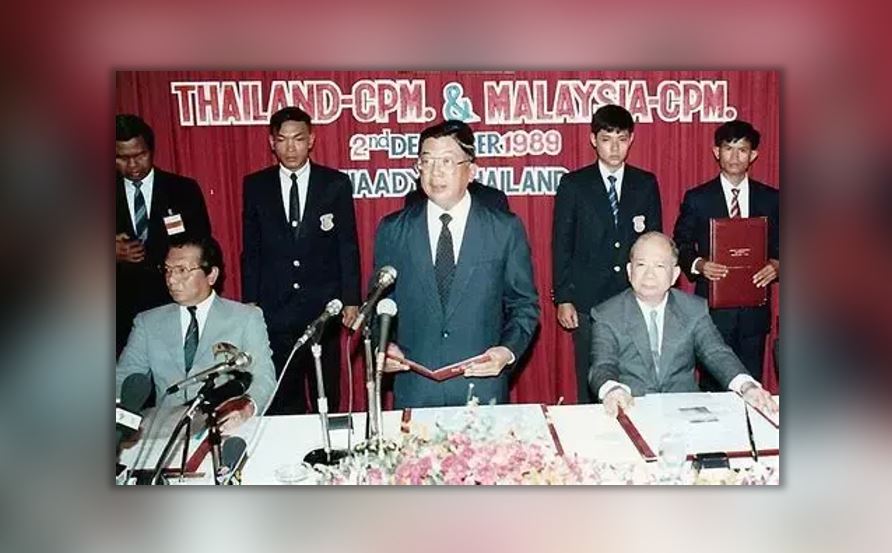
The Colonel (Kehormat), the General and his wife
3. Abah understood concepts like delayed gratification and social mobility. He did not use these terms back then, but we knew very early what he wanted us to do: work hard, get better jobs, live better lives. That’s my Abah.
4. Back in 2019, when I joined the University, one in every 10 of our 15,000 full time undergraduates come from B1 families, those earning a monthly income of RM1,000 or less. I can only imagine the trials and tribulations faced by these kids and their families in their journey towards higher education. Such grit and determination. Two years ago, a mother travelled more than 30km by motorbike with her son, dropped him off for registration at the University, doubled back, and sent another son to another institution. It rained that day. Her hands were shaking, one University officer recounted. It did not matter to her. She insisted on witnessing her son stepping into a university. Like Abah, she probably reminded her son to work hard, get a better job than hers, and live a better life than hers. Hope and determination are timeless and universal. So too are relentless moms and dads.
5. At the University, we associate social mobility with graduate employability, or GE. A 90 per cent GE implies nine out of 10 of our graduates have received a job offer, or have already secured one, within the first six months of leaving the university. Here, the definition of ‘a job’ is stretched to include those who pursue postgraduate studies, waiting for a job placement, and those who signed up for upskilling courses. For 2021 graduates, the national GE average was 85.5 per cent. The University’s was 90.5 per cent. But we need to treat this number carefully.
6. We dove further and posed questions:
What is the percentage of underemployment?
What is the average starting salary for a particular undergraduate programme?
Is there any correlation between socio-economic background and probability of securing a job?
How many ended up overseas, or in multi-national companies, or government linked ones?
What was the impact of internship and command of English?
How many found work in the area that they were trained in, and how many did not?
How many earn below minimum wages – who are they, and why?
In one study, 76 per cent of the University’s zakat- supported students found jobs, but from the group, 56 per cent of them earn less than RM1,500 per month. This is not social mobility. We failed to break the vicious cycle. We need to try harder.
7. We also tied GE back to how active the student was during university days, whether the student was the first in the family to pursue a degree, what we termed as “sulung”, their final year project – regardless of ethnicity, religion, and nationality. Imagine how intimidating university life can be if you are a sulung from a B1 family. It is not a level playing field and sulung B1s are our acid test. I was informed that for the University’s 2022/2023 intake, one in every three students is a sulung. That is a heavy burden on our shoulders.
8. We listened to our industry partners, and followed national agendas, budget speeches, economic outlook, and of course, there is no shortage of criticism towards universities when it comes to market ready graduates. We are acutely aware of the dwindling public confidence towards us. It hurts. Very much.
9. We repeatedly asked ourselves: did we add value to our students? Were we a good vessel for social mobility? If yes, Alhamdulillah. If not, then what are we going to do about it?
‘What are we going to do about it’ is the type of question that would lead to spats and battles. Bloody ones at times.
10. Some of my colleagues in academia would brush GE aside. It reeks of neoliberalism, they opined. I had to Google that term: neo-liberalism. Some circles consider the word profanity, the idea dirty. Universities are about instilling values; a journey of self-discovery they would add. It is not our job to ensure that our graduates get jobs. I would argue – working on values and student marketability are two sides of the same coin. They do not cancel each other.
11. I understand that GE is dictated by both internal and external factors. While we have no influence over external factors such as market forces, we certainly have complete control over how we deliver our amanah. I do not think we have the heart to tell the “motorbike mom” that it is not our job to see to it that her son will have a fighting chance of securing a better job than hers. Would you?
Those were the spats. Here come the battles.
12. If an undergraduate programme continuously posts low GE, or high underemployment, where graduates earn lower than minimum wages doing gig-economy jobs with non-existent provident funds, plus having low student subscription to begin with, then the obvious thing to do is to suspend the programme and not commit more students to injustice. “Suspend” here means that we take a step back, make the necessary improvements, and re-introduce the programme once the tweaks are completed. Suspend is ‘jumud’ in Malay. Closing a programme for good is called ‘lupus’. Straightforward and common sense, correct? Unfortunately, not so to some.
13. The process of jumud and lupus is done in the Senate, the highest governing body in a university when it comes to academic matters, comprising the collective wisdom of the university’s top management, middle management, and a large number of professors. Wisdom, however, does not necessarily lead to courage, for courage is not the absence of fear.
14. Suggesting to suspend an undergraduate programme is akin to declaring a war. Emotions and sentiments will run high. People resists change and would go to great lengths to maintain the status quo. They will write to the Ministry, to politicians and aspiring ones who are willing to listen. There will be poison letters, and social media circus. You will be seen as creating disharmony, and disharmony is a bane to political correctness. Good leaders do not do these, do they?
I appreciate the creativity in the mocking poster of me overlaid with a no-parking sign with ‘api neraka’ as the background, protesting the necessary changes to their courses, forcing their beloved lecturers out of comfort zones. Or, the guy who suggested that I drink kratom (kethum) potion, or Clorox – equally potent – so that I grow a bit more brain. Hilarious guy. Stupid VC.

Exuding creativity – the ‘api neraka’
15. As I said, these battles can be bloody. Sometimes you win. Other times you lose. Some programmes get suspended, improved, and came back stronger. Other programmes continue without change, continue showing low GE and subscription.
Sadly, when you lose, others will too. Collateral. Our students. And their parents. And the nation. You will have no regrets if you fought a good battle. But you still harbour the worry. It eats you inside.
16. But my battle-hardened colleagues pushed on. They are determined to produce marketable graduates with values and akhlak. We introduced paid internship in USM starting from first years, increase student mobility funds, built the Bricks – a student run gift and memorabilia outlet, introduced the JORAN app for part time jobs, gig economy hiring of students to assist central agencies like the international office, and the PITCH program where we fund ideas. PITCH graduates with ideas that gained traction were offered options to form their own spinoff company under the University. I have already highlighted the LIFE and Meta-LIFE programmes in my previous piece. We worked our way around Covid-19 and provided stipends for our students to intern in companies that struggled financially and were not able to offer places despite intending to. Nationally, those who pursue internship have 15 per cent better chance of securing a job compared to their peers who did not. These staff were relentless, unsung heroes.
17. I get front row seats to convocation ceremonies. You will see me sat on stage almost motionless. I seldom check my phone or read the convocation book. Nor would I indulge in lengthy conversations with the person sat next to me – usually one of my deputies. I kept my gaze at each graduate on their historic five seconds of fame on stage, making their way to receive their scroll. At times I would look at the proud parents sat in the crowd. Some showed signs of exhaustion from years of toil, hardships, and sacrifice. They have been relentless.
I would sometimes nod to these parents when we make eye contact. My sincere respect goes out to them.
I put on a happy face for the ceremony, but I could not help worrying how many of these kids have secured a good job, gone on to do better things, on their way to lead better lives.
Could we have done more?
Did I fight a good battle for them, their parents, and my Nation, my Tanahair?
I know some of my staff who bled and were scarred in the battles we fought together. My thoughts are to all of you. And to my Abah – the General. Thank you.
I hope you put up a good fight too. Inshaa-Allah. God willing.



Leave a Reply