
By Professor Dato Dr Ahmad Ibrahim
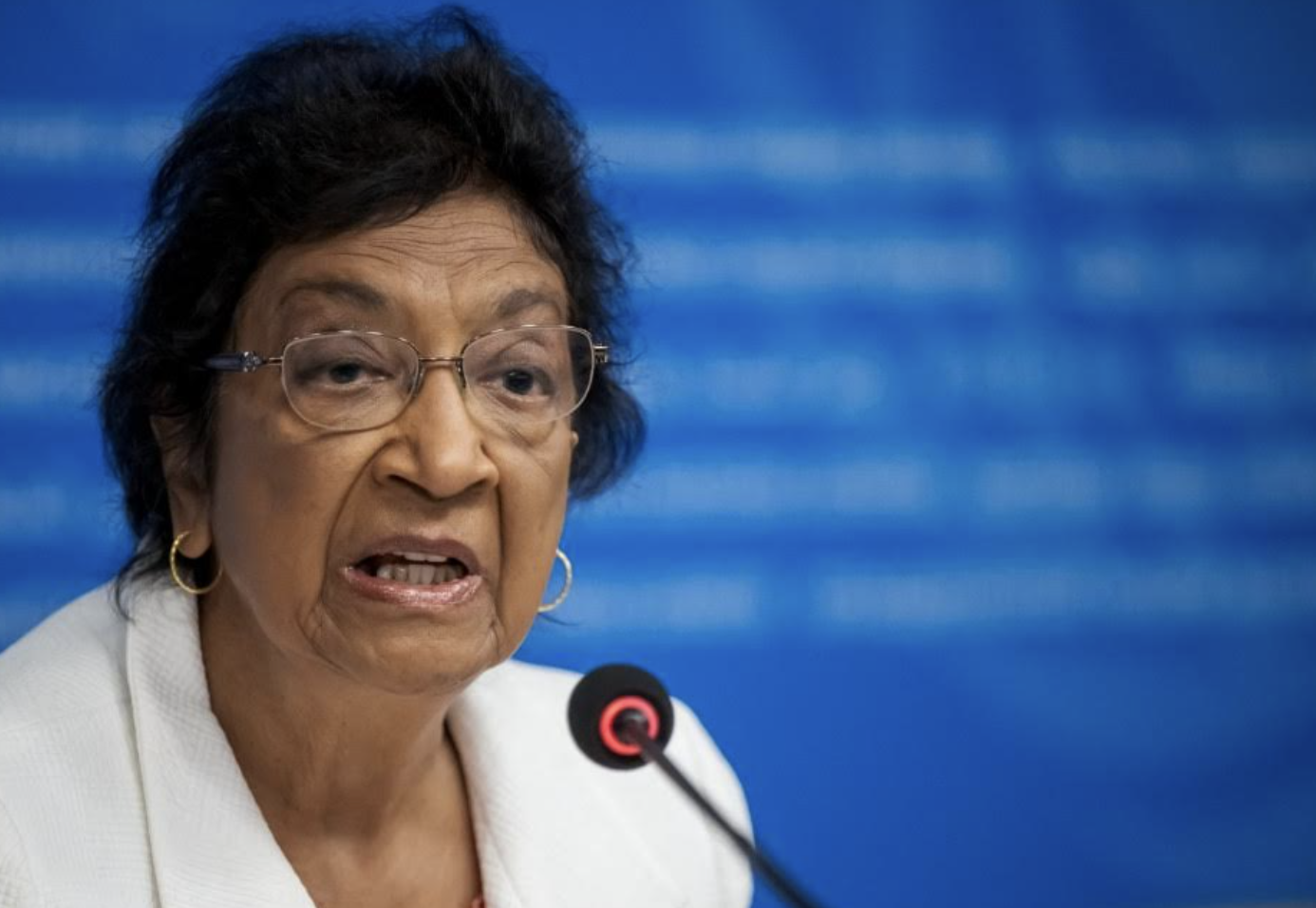
When the Committee awarded the 2026 Nobel Peace Prize to Navanethem “Navi” Pillay, it did more than honor an extraordinary jurist. It drew a line in the sand at a moment when that line is being erased.
Pillay’s biography alone justifies the prize. Born into a family of Indian Tamil origin under apartheid rule, she became a lawyer who defended Nelson Mandela, then went on to serve as a judge at the International Criminal Tribunal for Rwanda, the International Criminal Court, and the International Court of Justice. She was UN High Commissioner for Human Rights. She chaired the UN Commission of Inquiry on the Occupied Palestinian Territory. At Rwanda, she helped establish that rape and sexual violence could constitute crimes against humanity and genocide—and that a defendant could be charged with incitement to genocide based purely on propaganda.
The timing and the language of the citation matter just as much as the résumé.
The Committee went out of its way to situate Pillay in a 125-year lineage. The first Peace Prize already underscored “the importance of resolving conflicts through international law.” The post-war decades expanded that architecture. The Cold War’s end accelerated it.
The rules-based international order has never been perfect. The greatest powers have often evaded responsibility. In practice, cases brought under international law have produced different results depending on who is the perpetrator and who is the victim.
That is a diagnosis.
And then the warning: “The system of international law is under pressure, and its institutions under attack. We see a shift towards power politics at the expense of legal frameworks and global respect for law and justice. Whenever might overtakes right, it undermines stability, trust and peaceful co-existence.”
Read that again. The Nobel Committee is saying, in the plainest terms available to it, that the post-1945 legal order—the one that produced the Nuremberg trials, the Geneva Conventions, the ICC, the ICJ—is being dismantled by the very powers that built it.
We are living through the most dangerous period for international law since the Cold War. The ICJ is hearing a genocide case against Myanmar. It has heard arguments involving Gaza. The ICC has issued arrest warrants. And in response, states are not just ignoring these institutions—they are actively sanctioning the judges who serve on them.
The Committee names this directly: “Today, as these same judges are sanctioned, and their institutions are attacked, we need people of courage, vision and determination—qualities that Navi Pillay demonstrates in her work on the bench.”
The Committee’s most important sentence is deceptively simple: “Peace requires justice.”
That formulation inverts a common assumption. Realists have long argued that peace requires accommodation—that you negotiate with whoever holds power, that you trade justice for stability, that accountability is a luxury for peacetime. The Nobel Committee is rejecting that bargain outright.
History supports the Committee’s position. The Rwandan Tribunal, where Pillay made her mark, did not merely punish perpetrators. It established legal facts. It gave victims a forum. It created a record that made denial harder and impunity more costly. The same is true of the ICTY, the ICC, and the ICJ. These institutions are slow, imperfect, and politically constrained. But they are the only mechanism the world has for saying that some acts are crimes regardless of who commits them.
When that principle erodes, the consequences are not confined to courtrooms. They show up as more wars, more atrocities, more displacement, more suffering. The Committee is right that “might overtaking right” undermines stability and trust. The strong do what they can; the weak suffer what they must. That is not a recipe for peace. It is a recipe for perpetual conflict.
The Nobel Committee is not naive. It acknowledges that international law has always been unevenly applied. It notes that the great powers have evaded responsibility. But it also insists that the trend line has been toward more law, not less—more diplomacy, treaties, and legal mechanisms; fewer threats, violence, and warfare.
That trend is now in reverse.
The question the 2026 Prize poses to the world is whether we believe in the project of international law or not. If we do, we must defend its institutions, its judges, and its principles—not as a supplement to peace, but as its foundation. If we don’t, we should be honest about what replaces it: a world where the strong decide, the weak submit, and justice is whatever the powerful say it is.
Navi Pillay has spent her life on the right side of that choice. The Nobel Committee has now put the rest of us on notice.

The author is affiliated with the Tan Sri Omar Centre for STI Policy Studies at UCSI University and is an Adjunct Professor at the Ungku Aziz Centre for Development Studies, Universiti Malaya. He can be reached at ahmadibrahim@ucsiuniversity.edu.my.
Leave a Reply