
By Fakhrur Razi Ahmad
JOHOR BAHRU: What may appear to be a worthless piece of discarded electronic equipment can, in the hands of a young environmental champion, become a symbol of hope, creativity and responsibility towards the planet.
At Sekolah Menengah Kebangsaan (SMK) Mohd Khalid, students are breathing new life into materials once destined for the rubbish heap, transforming electronic waste into imaginative creations while carrying a powerful message beyond their classroom walls — that protecting the environment begins with the choices people make every day.
Their efforts demonstrate how even the smallest object, such as a keychain fashioned from discarded electronic components, can become a meaningful reminder that yesterday’s waste need not become tomorrow’s environmental burden.

What began as an environmental initiative through the school’s participation in Toyota Eco Youth 2025 has since blossomed into a continuing campaign of education, innovation and community engagement.
The initiative has brought together students, teachers, neighbouring schools and residents in a shared endeavour to address the growing challenge of electronic waste, commonly known as e-waste.
Rather than allowing environmental education to remain confined to textbooks and classroom discussions, the school has embraced a more practical approach, encouraging students to turn knowledge into action and creativity into meaningful advocacy.
One such effort involved a keychain-making workshop conducted in collaboration with Perpustakaan Sultan Ismail, which operates under the Johor Bahru City Council.
Using suitable materials recovered from discarded electronic items, participants crafted keychains, discovering how objects once regarded as useless could be transformed into something attractive and functional.
Beyond the creative activity lay a deeper lesson — that responsible consumption, thoughtful reuse and proper waste management are essential to safeguarding the environment for future generations.
The collaboration also complemented the library’s Sudut Lestari, an environmental education corner designed to encourage greater public awareness of sustainability.

For the participating students, the experience was more than an exercise in handicraft. It became an opportunity to communicate an important environmental message through something tangible, while demonstrating that education can extend into the very heart of the community.
Programme coordinator Fakhrur Razi bin Ahmad acknowledged that establishing the initiative had not been without challenges.
However, the cooperation and encouragement received from various parties helped overcome the initial difficulties, making the activities more manageable and enjoyable for everyone involved.
More importantly, the programme provided students with valuable opportunities to acquire knowledge and practical experience beyond the conventional learning environment.
Their journey of environmental advocacy subsequently took them to exhibitions and community programmes, where they proudly displayed creations fashioned from recovered electronic materials.
Some of these items were also offered for sale, introducing students to basic entrepreneurial skills while reinforcing the importance of giving discarded materials a second purpose.
For many participants, standing before visitors and explaining their creations became an exercise in confidence, communication and personal growth.

Every conversation offered an opportunity to challenge attitudes towards waste, encouraging members of the public to reconsider what they discard and how unwanted electronic equipment should be handled.
The school’s environmental outreach gained further momentum on April 25, 2026, when students participated in the Johor State Bioschool Exhibition and Shori No Niwa Planting Project Competition at SMK Bukit Batu.
The event provided another platform for the students to share their environmental message with a wider audience, demonstrating how creativity and education can work hand in hand to encourage sustainable practices.
The school’s commitment to environmental innovation was further reflected in its participation in the national-level STEM X TASEK 2026 programme, held at SMK Tasek Utara in Johor Bahru on Aug 22.
Through innovation competition entries and e-waste exhibitions, students demonstrated the relationship between science, technology, engineering and mathematics (STEM) education and environmental responsibility.
The event also enabled visitors to appreciate how scientific knowledge and technological innovation could be applied to everyday environmental challenges.
Far from treating sustainability as an isolated subject, SMK Mohd Khalid has sought to weave environmental consciousness into a broader educational framework that embraces technology, creativity and community participation.
The school is also incorporating artificial intelligence (AI) into its learning approach through AISLE, an initiative that brings together robotics education, environmental action, community collaboration and the ethical application of AI.
Complementing this approach is the eSYNERGY E-Waste Heroes initiative, which encourages students to investigate environmental problems, explore innovative solutions and translate their ideas into practical action.
Through these activities, students are learning that technology should not merely be about creating newer and more sophisticated devices, but also about understanding the environmental consequences of their use and disposal.

The initiatives have also created opportunities for students to develop critical thinking, teamwork, communication and problem-solving skills — qualities that will remain valuable long after their school years.
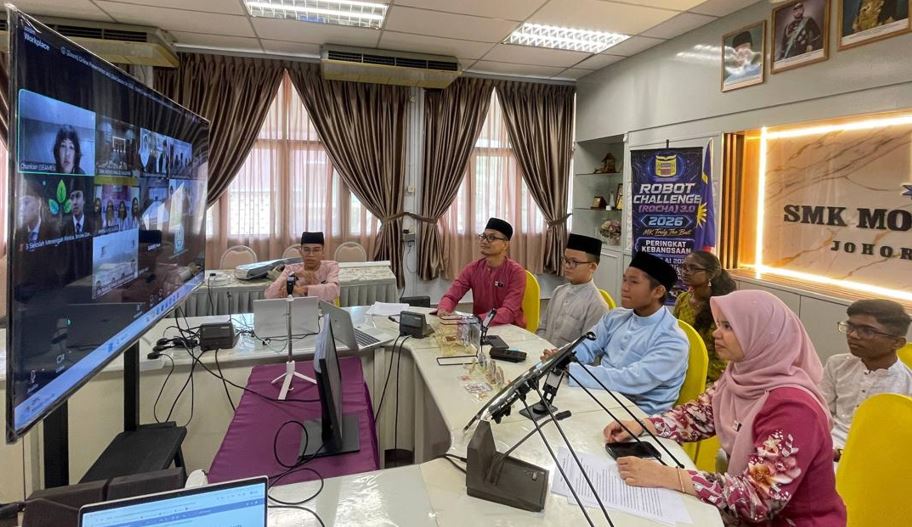
Adding another significant chapter to the school’s environmental journey was its selection as a finalist in the SEAMEO-Japan ESD Award 2026.
The award, themed “Learning and Well-being for Sustainable Futures: Leveraging the Power of AI”, recognises educational initiatives that advance sustainability through innovative learning approaches.
For SMK Mohd Khalid, the recognition represents an encouraging milestone in its continuing efforts to connect technological advancement with environmental stewardship and community well-being.
It also underscores the potential of school-based initiatives to nurture a generation that understands both the opportunities and responsibilities associated with technological progress.
Behind the programme’s continuing development is the commitment of the school leadership, teachers and students who have embraced environmental education as a collective responsibility.
Principal Rostena binti Ismail reaffirmed her strong support for the initiative, expressing hope that cooperation between the school and the surrounding community would continue to strengthen public awareness of responsible e-waste management.
Her commitment reflects the belief that meaningful environmental change requires sustained participation, not merely occasional campaigns or symbolic activities.
Although turning selected electronic components into handicrafts can spark interest in sustainability, the school recognises that creative reuse represents only one aspect of responsible e-waste management.
The broader challenge lies in helping the public understand how to identify unwanted electronic items, recognise the environmental implications of improper disposal and seek appropriate collection and recycling channels.
As technology becomes increasingly woven into everyday life, discarded electronic products present an environmental challenge that demands informed choices and responsible action.
By bringing environmental learning into libraries, exhibitions and community activities, SMK Mohd Khalid is extending the reach of its educational efforts beyond the school gates.
Its young environmental advocates are discovering that meaningful change does not always begin with grand declarations or sweeping initiatives.
Sometimes, it begins with a simple question about an unwanted electronic item, a conversation between a student and a visitor, or a small handmade keychain carrying a message far greater than its size.
And therein lies the enduring value of the school’s initiative.
For amid the fragments of discarded electronics, these young minds are discovering something far more precious than reusable materials — the power to inspire change.
What they are building is not merely a collection of recycled creations, but a culture of environmental responsibility, where knowledge blossoms into action and every thoughtful decision becomes a gift to generations yet unborn.
For when young hands learn to rescue what others discard, they do more than give waste a second life — they help give the Earth a better tomorrow.

Leave a Reply