
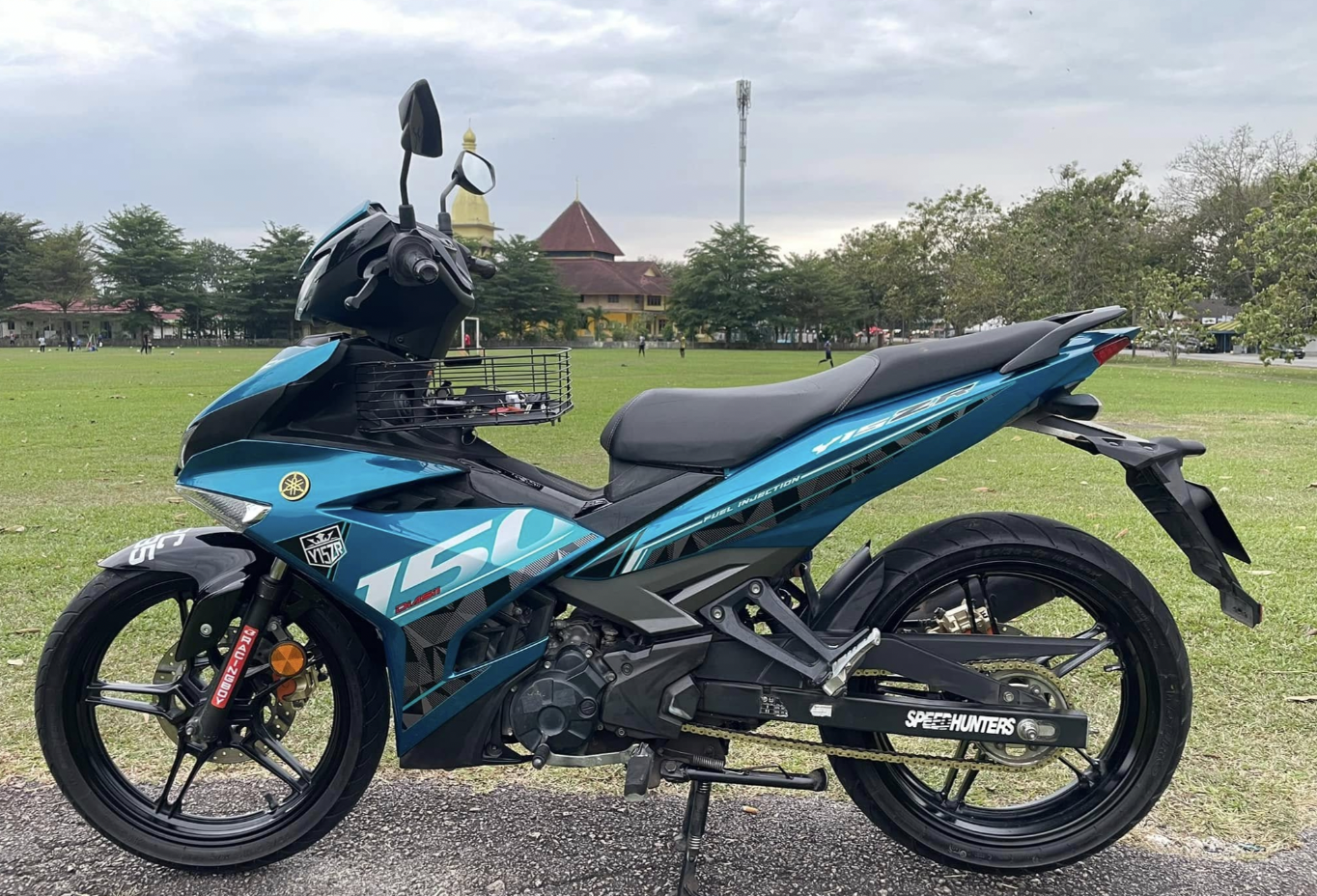
Petrol-driven motorcycles, particularly practical kapcai models and scooters continue to dominate the market because they offer an unmatched benchmark in cost efficiency, accessibility, and daily convenience.
Gil Carmo, CEO and co-founder of iMotorbike, an e-commerce platform that buys, inspects, certifies, and sells pre-owned motorcycles in Southeast Asia, however admitted that the transition to electric bikes is a gradual evolutionary process.
Electric mobility is an increasingly important part of global transportation and it will play a key role in long-term sustainability, he said.

Carmo said the particularly practical kapcai models and scooters continue to dominate because they offer an unmatched benchmark in cost efficiency, accessibility, and daily convenience.
“Commuting by motorcycle remains the ultimate inflation-buster, costing around RM16 in fuel compared to RM300 for a car over the same distance, with insurance being 10 to 20 times cheaper,” he said.
Carmo said while electric motorcycle manufacturers invest in R&D and public charging infrastructure matures, we do not need to wait to make an environmental impact.
“At iMotorbike, we drive immediate sustainability through the circular economy. By setting rigorous refurbishment standards and extending the lifespan of existing petrol vehicles, we keep them road-ready, minimise component waste, and deliver practical environmental benefits right now while newer technologies gradually scale.
He also addressed the range anxiety and the fear of being stranded once an electric motorcycle runs out of power.
“They are actually valid barriers to consumer confidence in any new technology.
“While we are a mobility platform rather than a vehicle manufacturer, our entire business is built on solving the trust and reliability gap for riders. We believe no rider should ever feel stranded on the road.”
Carmo said to address these concerns, iMotorbike built a robust support ecosystem that include iM Rescue, a dedicated roadside assistance service ensuring that if any rider ever encounters an issue or runs out of power, professional help is just a call away.
“Furthermore, every certified motorcycle passing through our platform undergoes a rigorous 170-point inspection, backed by a six-day return policy and a six-month warranty to eliminate uncertainty entirely.
“Safety on high-speed urban roads comes down to proven vehicle standards, visibility, and performance reliability. For manufacturers to build long-term confidence, electric bikes must demonstrate consistent acceleration, dependable braking systems, and build quality equal to traditional motorcycles,” he said.
Carmo added that as battery technology improves and manufacturers develop electric bikes with longer ranges, adoption will rise. However, the transition will take time.
Until it reaches widespread practicality, the most effective way to support safe, sustainable urban mobility in Malaysia is to optimise the safety and lifecycle of the millions of reliable vehicles already operating on our roads, he said.
Carmo said market platforms should not wait on policy alone to build solutions. iMotorbike for instance, has already pioneered a commercial buy-back and trade-in ecosystem. Sellers can bring any motorcycle to iMotorbike and receive cash on the spot after a professional 20-to-30-minute inspection.
“By capturing the complete history of these vehicles, we continuously refurbish and resell them in a closed-loop lifecycle.”
While manufacturers must establish clear guarantees regarding battery longevity and recycling protocols, integrated platforms like iMotorbike stand ready to provide the valuation data, transaction infrastructure, and trade-in mechanisms to make these lifecycles seamless for consumers.
Regional neighbours operate at a massive scale and while Malaysia has a motorcycle-to-car ratio of roughly 1:1, representing about 16 to 18.9 million registered bikes, Indonesia sits at a 6.5:1 ratio, showing how deeply two-wheelers are embedded as primary daily transport.
“The key success factor Malaysia can emulate is the full integration of two-wheelers into urban transport planning. In countries like Indonesia, Thailand, and the Philippines, motorcycles are recognised as the primary solution to urban congestion and space constraints.
“By providing a structured, secure, and digitised marketplace to trade these vehicles, we help Malaysia maximise transport network efficiency. Rather than viewing motorcycles simply as a secondary option, we must recognise their value as a core pillar of urban mobility,” Carmo added.
“Historically, the second hand market was fragmented and full of uncertainty, which is precisely why we founded iMotorbike to bridge the trust gap.
“We take full ownership of the transaction process. We professionally inspect every bike with a 170-point check, handle JPJ ownership transfers in a single sitting, and bundle financing, road tax, and insurance directly.
He added that iMotorbike back the vehicles with a 6-day return policy and a 6-month warranty, offering a level of after-sales protection that shifts industry standards. This comprehensive ecosystem is why they have successfully served over 10,000 customers across Southeast Asia.
“We are seeing a profound shift in consumer behaviour. Rising living costs have made pre-owned motorcycles a highly practical, sustainable, and respected alternative to new vehicles. Demand is growing across all segments, from everyday kapcai and scooters to meticulously maintained higher-displacement models.
Malaysia is uniquely positioned to lead Southeast Asia’s mobility landscape due to its rapidly growing tech ecosystem, stable regulatory environment, and skilled talent pool.
“Our recent US$10 million Series A funding led by global venture capital firm Headline, alongside the expansion of our flagship 46,806-square-foot Glenmarie showroom, reflects strong investor confidence in Malaysia as a regional launchpad.
“By setting benchmarks in transaction security, circular-economy execution, and digital marketplace innovation, Malaysia can firmly cement its position as the leader of Southeast Asia’s tech-driven mobility revolution.


Leave a Reply