
By Vincent D’Silva
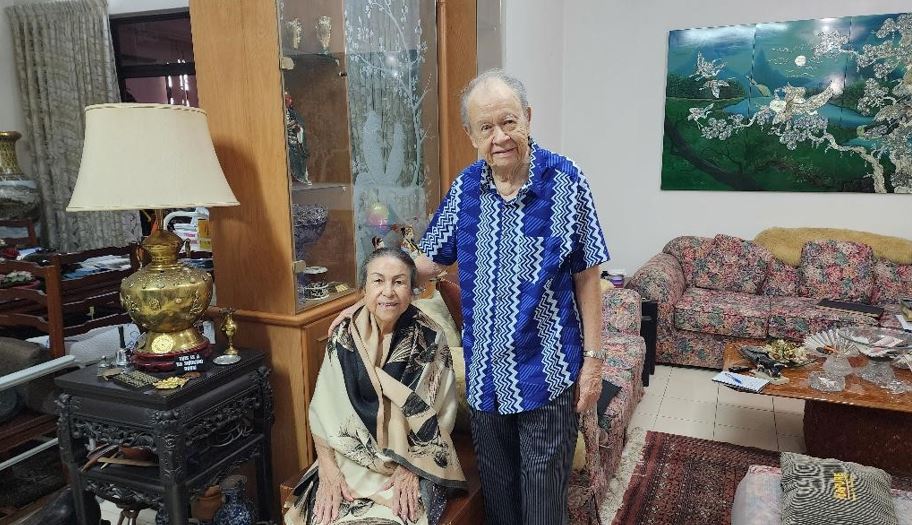
JOHOR BAHRU: “In a quiet room, you can still hear it—the gentle hum of fellowship, the familiar rhythm of our weekly meetings,” reflected Leslie Oswin Struys during an interview with ApaKhabar TV News Online.
“When I look back, I realise that a life in service is not built on grand gestures, but on years—decades—of simply showing up and doing what you can.”
“At 89, I have been both a witness and, in my own small way, a contributor to nearly six decades of service through the Rotary Club of Johor Bahru (RCJB). It all began almost by chance,” he added with a soft smile, “but it endured because of conviction—because once you understand the value of serving others, it stays with you for life.”
“I didn’t dream that I’d still be there nearly 60 years later,” he reflects with a gentle smile, recalling his introduction to Rotary in 1968.

Back then, Struys was a young Singaporean sent to Johor Bahru to set up a bottling plant. A call from then club president V. V. Chellam changed the trajectory of his life. What began as a simple invitation to attend a meeting soon became a calling. Within a year, he was appointed secretary.
By 1970, he had become the youngest president in the club’s history—an early sign of the leadership and commitment that would define his years ahead.
Today, he is the longest-serving member of the club, honoured with a district citation and the affectionate title of “Bachelor of Rotary”—a testament to his enduring contribution.
Yet for Struys, Rotary has never been about accolades. It has been about shaping character.
“It’s taught me to live by certain principles—Is it the truth? Is it fair to all concerned? Will it build better bridges?” he says. “I would like to think it has made me a better man.”
That philosophy—simple, ethical, human—has guided him through years of service marked by both challenge and quiet triumph. Fundraising, he admits, was often the hardest part of leadership.
“You realise how much need there is in society,” he says. “You cannot do these things alone. But through Rotary, we were able to help many.”
It is in these collective efforts that Struys finds his deepest pride—not in titles held, but in lives touched.
Some memories, however, linger more painfully than others.
“When you visit orphanages and meet children who have no father, no mother… it breaks your heart,” he recalls. “And when you try to leave, they cling to you and say, ‘Don’t go.’ That stays with you forever.”
Moments like these, raw and human, have anchored his lifelong commitment. Over 58 years, he has watched Rotary evolve—from an exclusive, male-only circle into a more inclusive, service-driven global network.
“Women are now part of Rotary, which was not the case before,” he notes. “We’ve become more open, more service-oriented. But one thing has never changed—we are all equal when we step into that room.”
Titles, he says, are left at the door.
“You could be a Tan Sri or a Datuk, but inside, you are just a Rotarian. Equal in the eyes of the Lord.”
It is this quiet democracy of service that continues to inspire him. Rotary, in his words, is not merely an organisation—it is a family.

“Fellowship, friendship—that’s what has kept me here,” the octogenarian says. “Some of my closest and dearest friends are Rotarians.”
Over time, the reach of that family has expanded. From being the first Rotary club in Johor, the movement has spread across the state, multiplying its impact. One milestone remains especially close to his heart—the establishment of a dialysis centre, the first of its kind by a Rotary club anywhere in the world.
“That is something we are very proud of,” he says. “To be part of something like that—it makes you happy to be a Rotarian.”
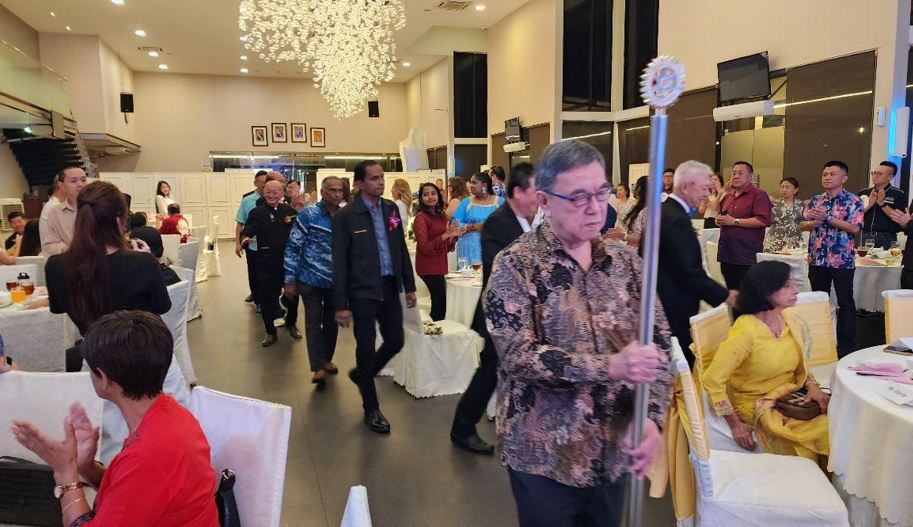
Even now, Struys continues to attend weekly meetings, often accompanied by family members who have, in turn, become part of the Rotary fold. His role today, he says with a touch of humour, is “to try and stay alive”—but beneath the jest lies a deeper purpose.
“To support the younger members, to guide them quietly, without discouraging them,” he explains. “That is what I enjoy most.”
His advice to the next generation is simple yet enduring: “Stay the course. Don’t be put off by difficulties. That is life.”
Leadership, he believes, is rooted in humility and teamwork. “If you are a loner, you will not enjoy Rotary. It is about sharing, about community.”
And above all, it is about service—giving back to a world that has given much.
He recounts a story of the late president S.R. Nathan of Singapore when he completed his first term, despite age and illness, chose to serve a second term in office.
When asked why, the president replied: “I have eaten the salt of Singapore, and I want to give something back.”
For Struys, that sentiment captures the very soul of Rotary.
As he reflects on his journey, he does not seek grand remembrance. Only this:
“That I contributed, and helped make the Rotary Club of Johor Bahru a better, stronger place—one that people turn to for help.”
In one sentence, he distils nearly six decades of service into four quiet virtues:
“Gratitude, humility, patience, and love for your fellow human beings—especially those less privileged than yourself.”
It is a philosophy lived, not preached. And in the gentle continuity of his presence—week after week, year after year—Leslie Oswin Struys reminds us that the true measure of a life is not in how loudly it is celebrated, but in how deeply it serves.


Leave a Reply