
By Ng Kwan Hoong
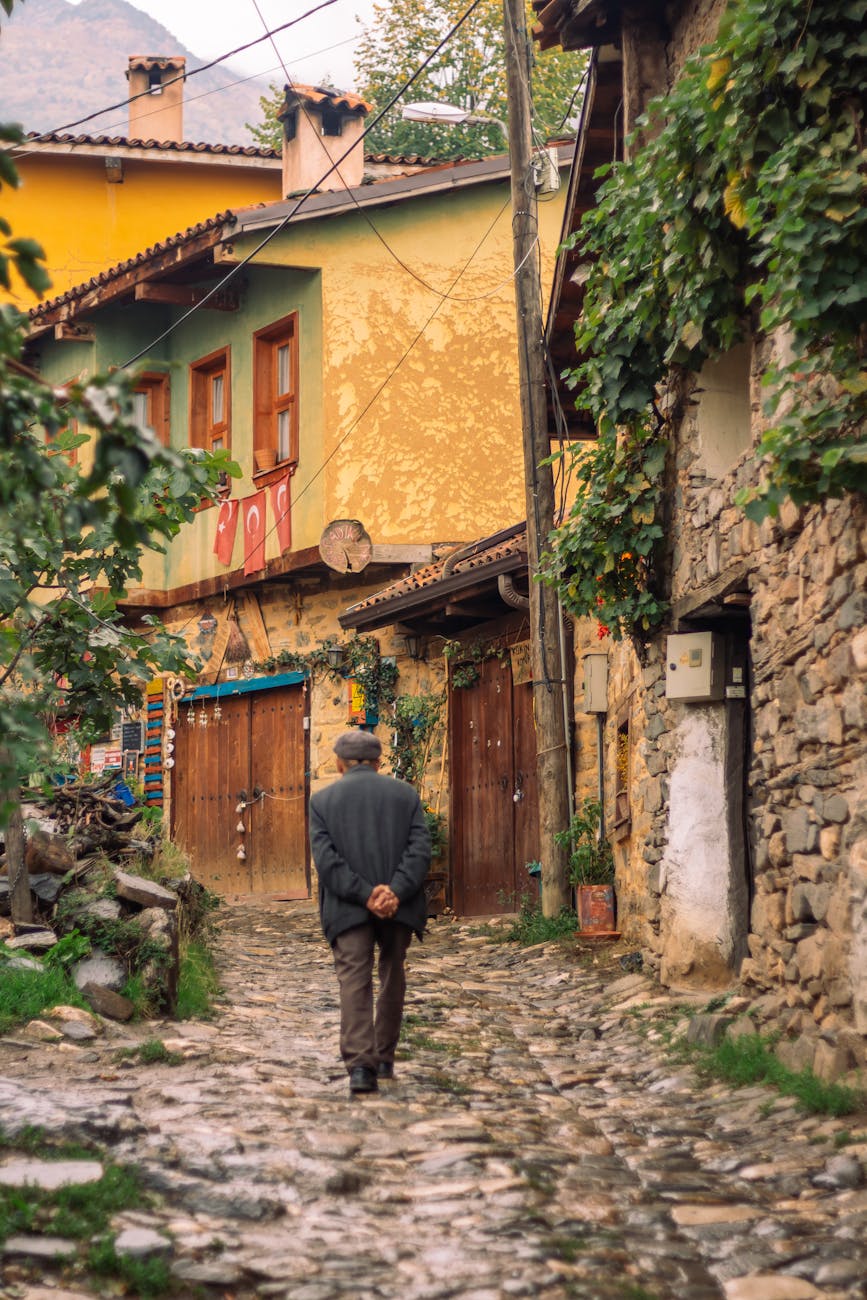
It was a cold mid-November afternoon in Fukuoka. I had just stepped out of the hotel when I noticed an old man standing by the roadside, waiting to cross. He was slightly bent, one hand gripping his walking stick. His steps were slow and deliberate. The traffic was heavy, the wind was sharp, but he was patient.
I found myself pausing a few metres behind him. A younger version of me might have rushed forward to offer help, but something held me back. The way he stood, the way he moved — there was no trace of frustration or despair. Only quiet determination. He waited, gathered himself, then crossed steadily, one step at a time. At one point, he stumbled slightly, paused, then resumed.
That was the first time I truly understood gaman.
In Japanese philosophy, gaman carries deep meaning. It is often translated as patience, perseverance or endurance, but none of these quite capture its spirit. Gaman is the quiet strength to carry difficulty without complaint. It is about holding oneself together, dignifiedly, in the midst of hardship.
It reminded me of something Viktor Frankl, the Austrian psychotherapist, once wrote in Man’s Search for Meaning, “Between stimulus and response, there is a space. In that space is our power to choose our response. In our response lies our growth and our freedom.” In that space, he said, lies our freedom to choose our attitude, our action, our meaning. Gaman lives in that space. It is the choice to respond to hardship with steadiness, to preserve grace when grace is hardest to find.
Years ago, after the Fukushima Daiichi nuclear disaster struck, I was invited by the International Atomic Energy Agency to join a team studying the long-term effects of radiation on the local communities, Japan and the world. The earthquake, tsunami, and subsequent nuclear power reactor malfunction had left unprecedented destruction in their wake. Entire towns were devastated. Families were displaced. The air was thick with uncertainty and grief.
What stayed with me most were the women. Many had lost their homes; some had lost husbands or children. Yet they stood in long queues for food and water, often sharing what little they had with others. Some set up makeshift classrooms for their children using salvaged furniture and cardboard. Others tended to the elderly, ensuring no one was left alone. They rarely raised their voices. They did not seek sympathy. But they held their sorrow, fear and duty with remarkable composure. That was gaman in action.
A reminder
We live in a world that often celebrates noise: loud achievements, dramatic stories and fast success. But much of life’s real strength is quiet. It shows up not in grand gestures but in ordinary resilience. A single mother working two jobs without complaint. An older man living alone still sweeps his porch every morning. A student struggling silently through anxiety, still showing up for class.
This is not to glorify suffering. It is not to say we should remain silent in the face of injustice or pain. Rather, it is a call to care for us and for others when life becomes heavy. To endure without bitterness. To walk forward, albeit slowly, even when our legs are tired.
Younger generations today face their own battles: pressures from studies, uncertainty in work and constant distractions from social media. Sometimes they are told to be tough, to push through, to win. But gaman offers something different. Gentleness, not toughness. Patience, not pressure. It teaches us that we do not have to be loud to be strong.
I thought again of the old man as I watched him disappear into the crowd. No one applauded him. No one noticed him. But something about that slow crossing stayed with me. He did not rush. He did not stumble for sympathy. He simply kept going.
There will be days when life feels overwhelming – when illness strikes without warning, when plans fall apart, when losses feel too heavy to carry. We may not always be able to fix what is broken. But we can choose how to move through it.
And in that choice, there is quiet greatness. Because endurance reveals the quiet greatness already within us.
The author is an Emeritus Professor of Biomedical Imaging at the Faculty of Medicine, Universiti Malaya. A 2020 Merdeka Award recipient, he is a medical physicist by training but also enjoys writing, drawing, listening to classical music, and bridging the gap between older and younger generations. He may be reached at ngkh@ummc.edu.my




Leave a Reply